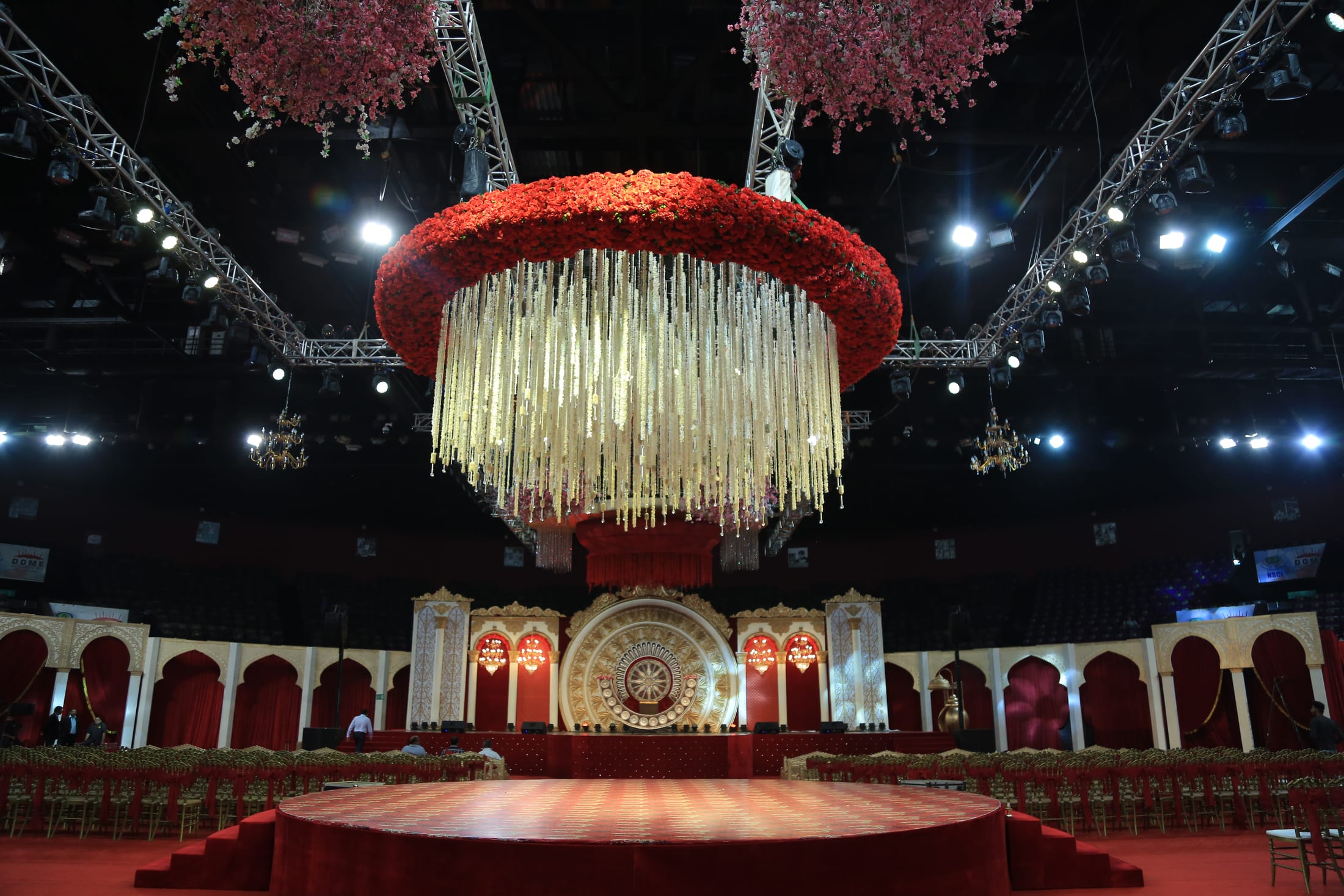
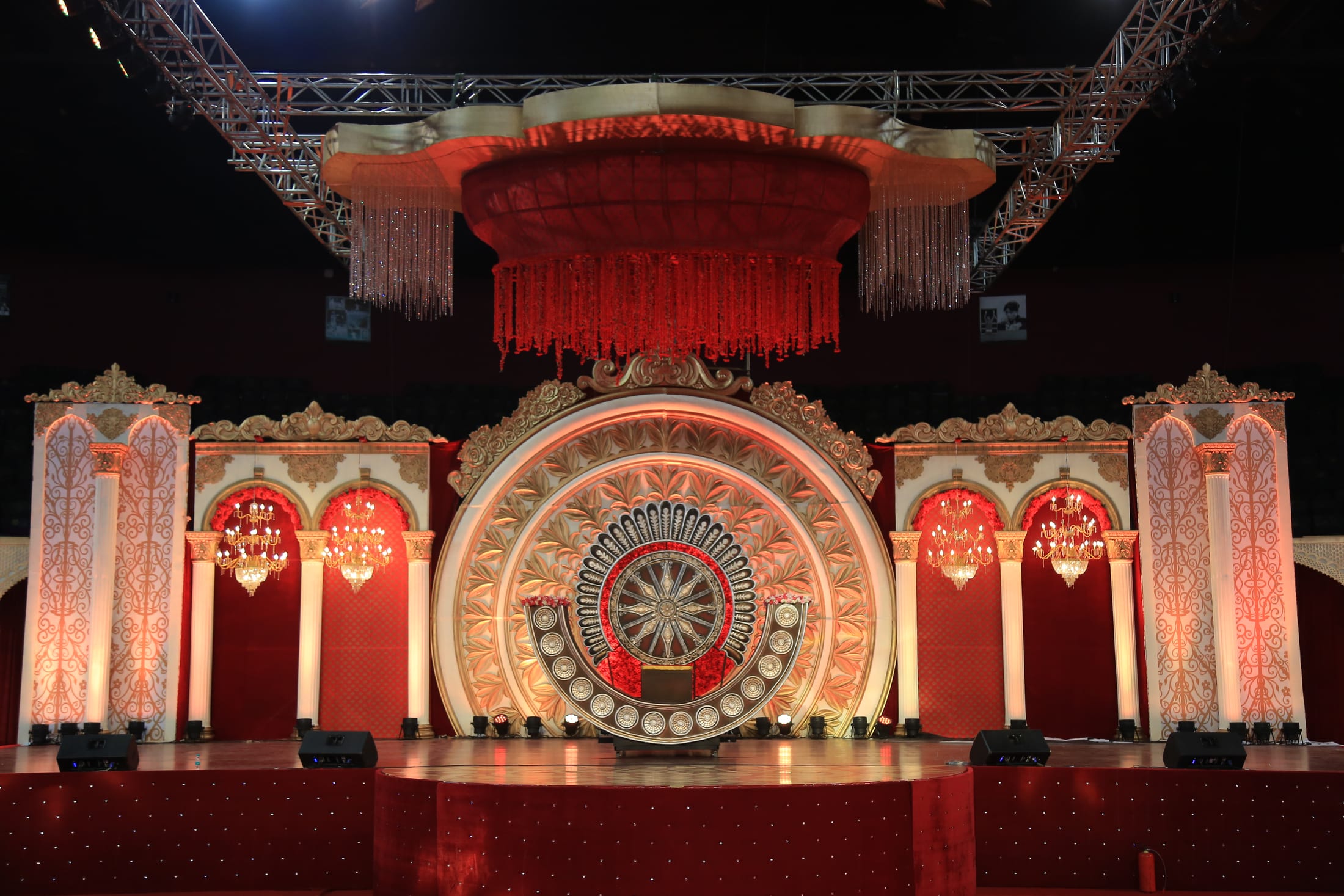
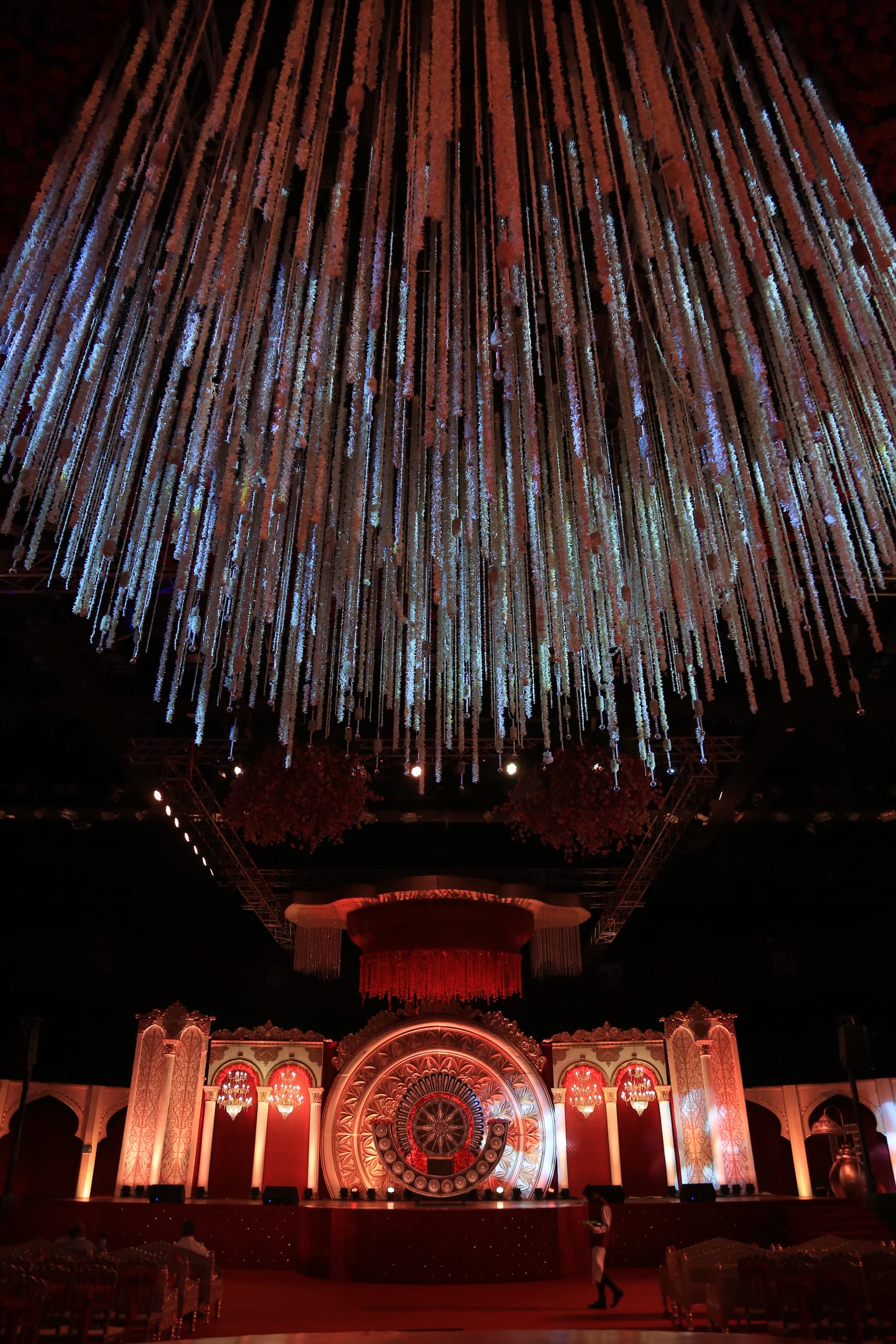
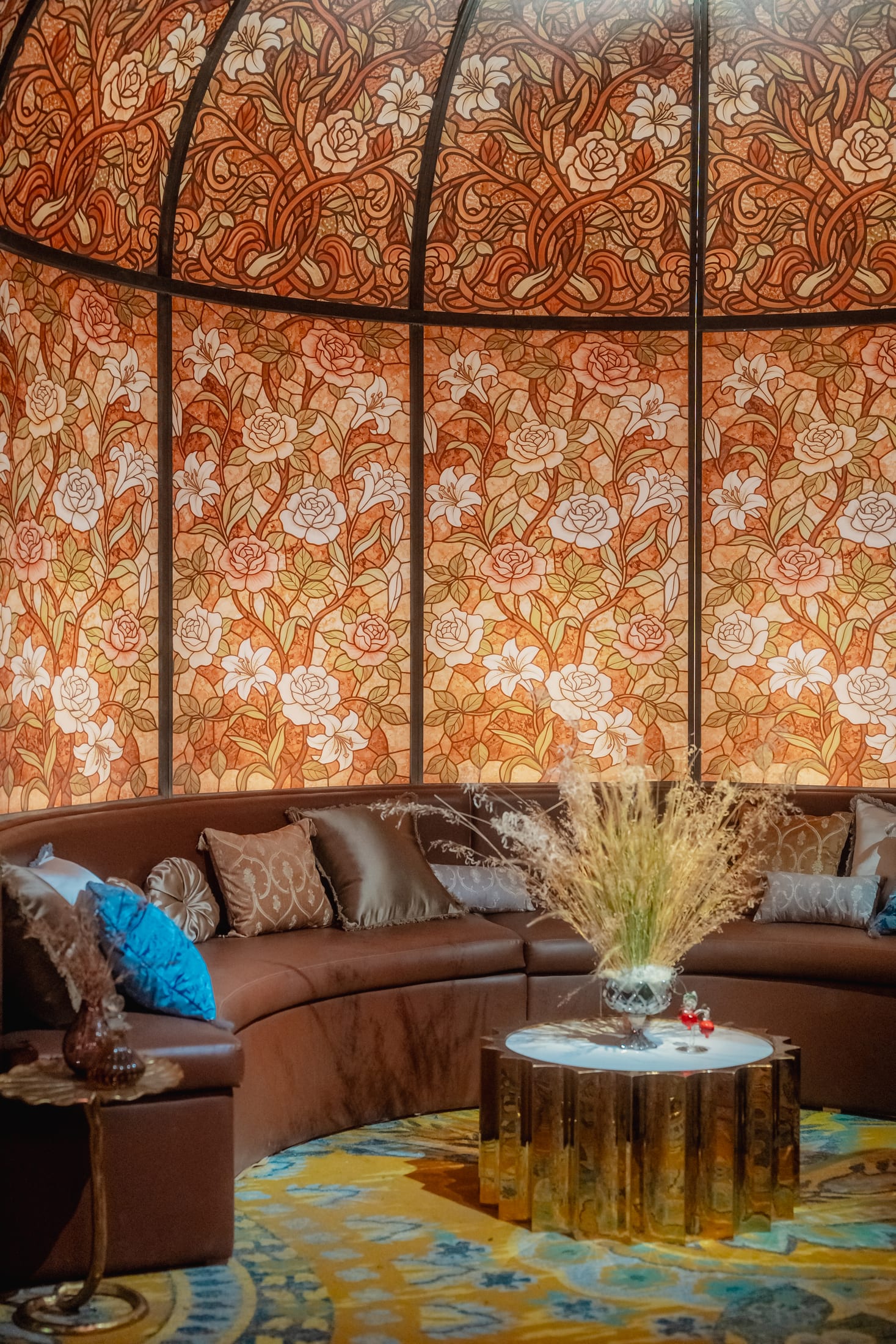
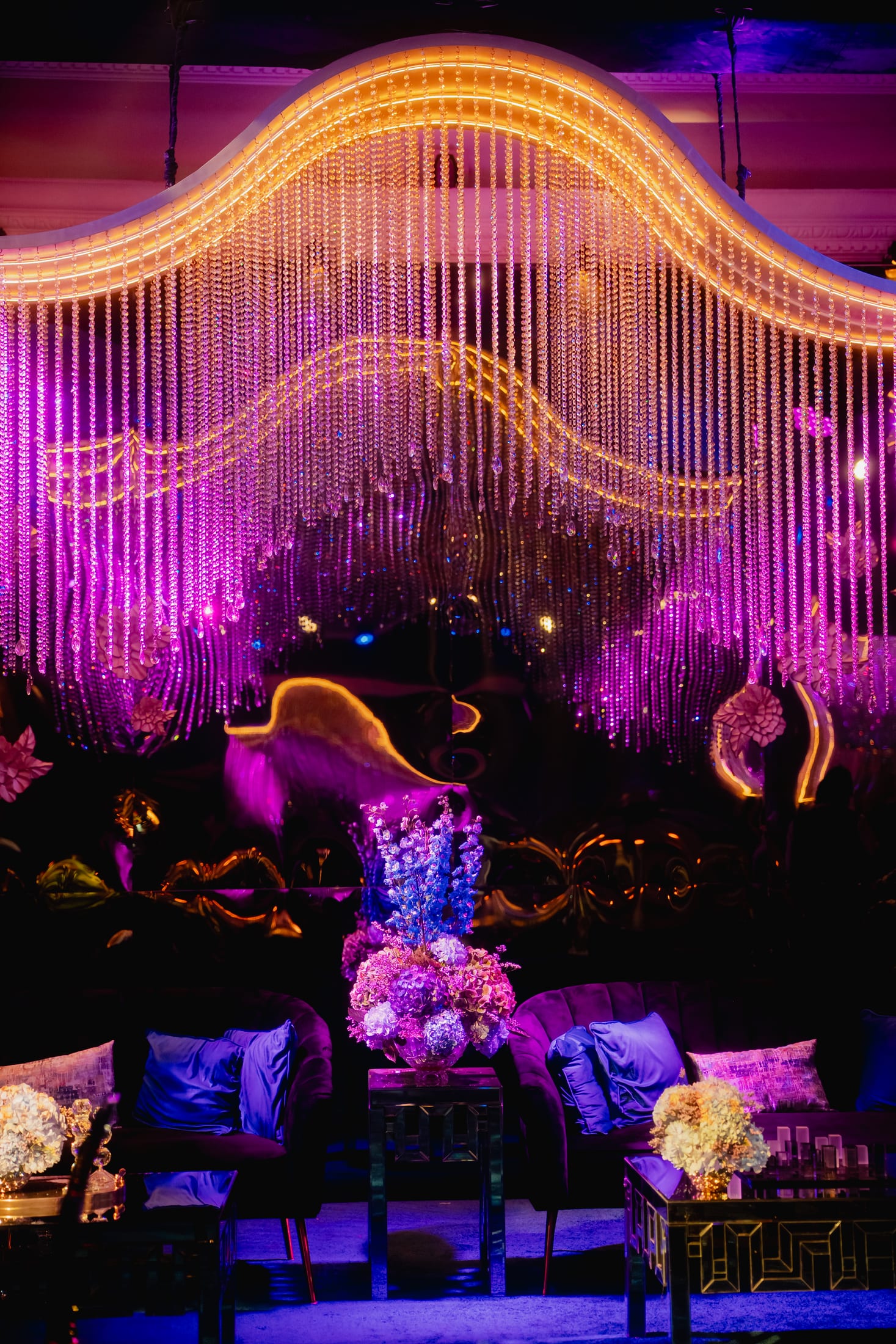
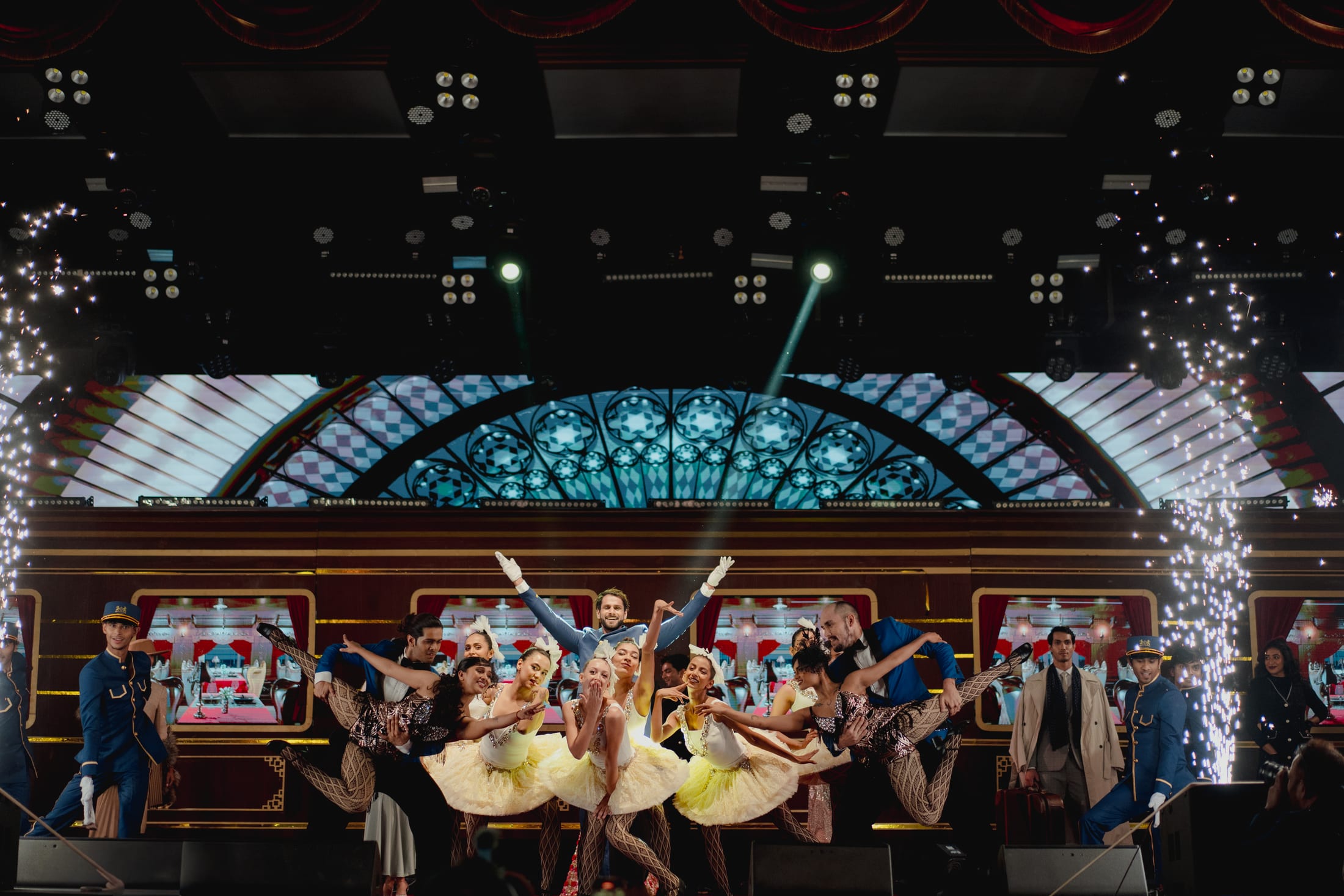
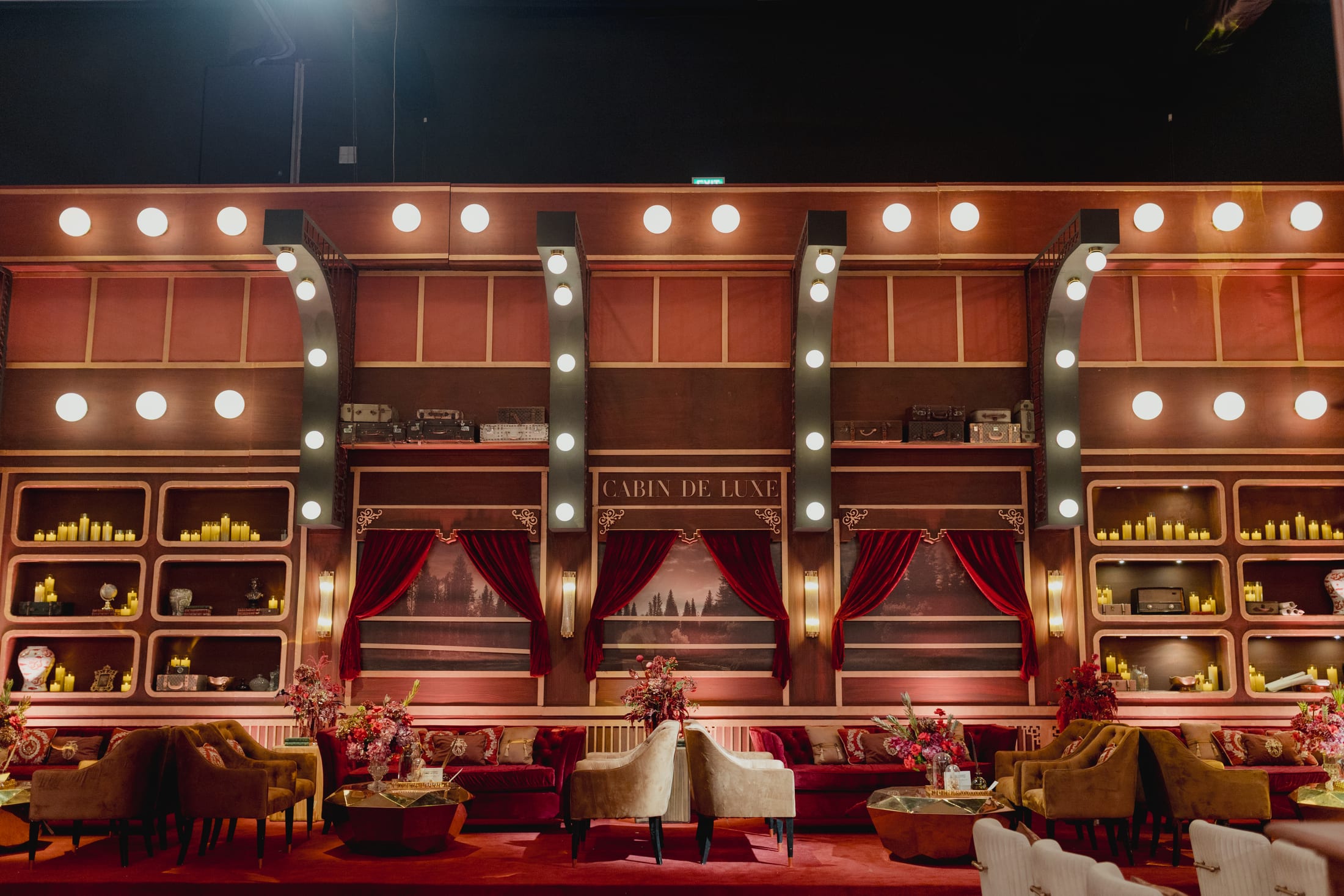
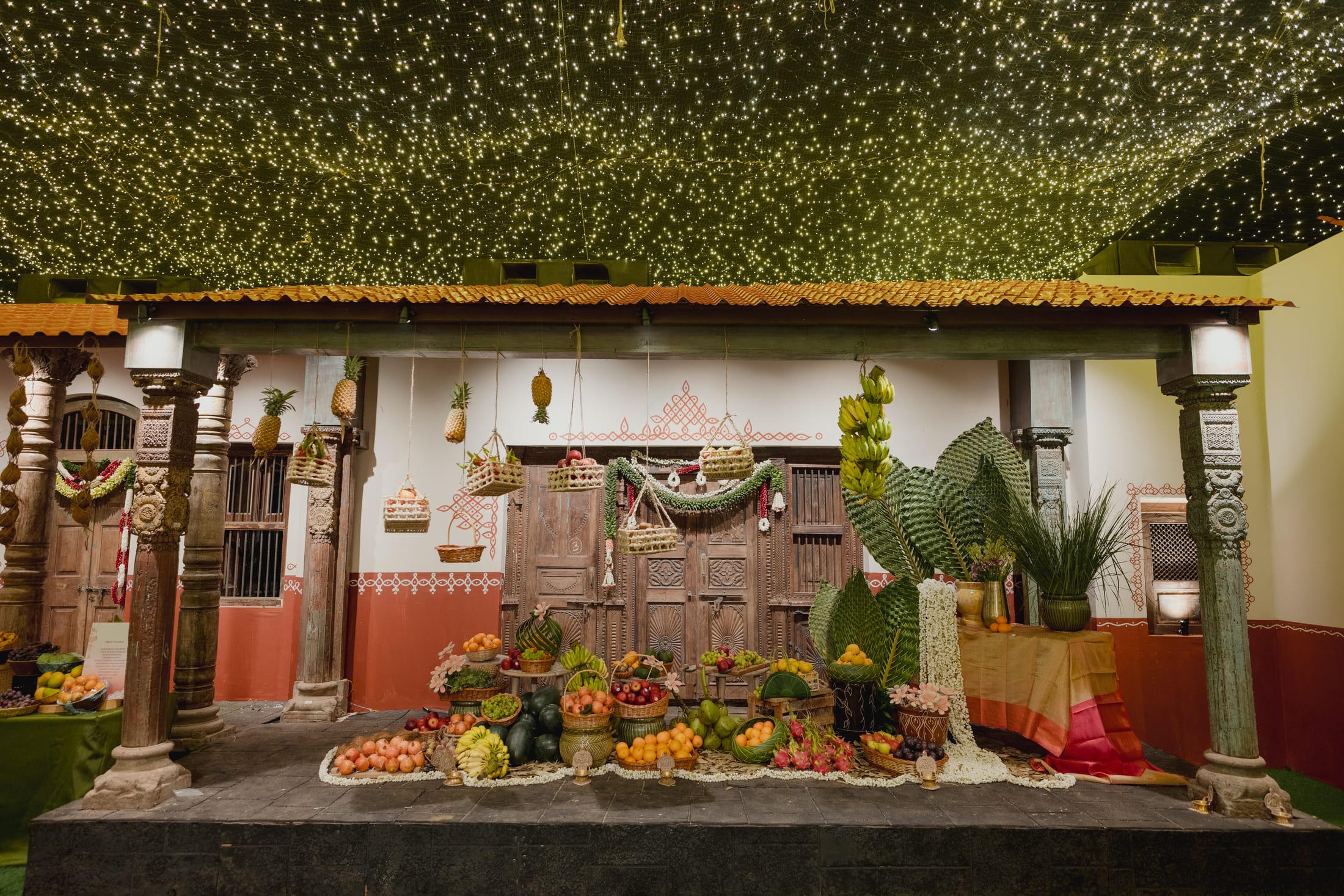
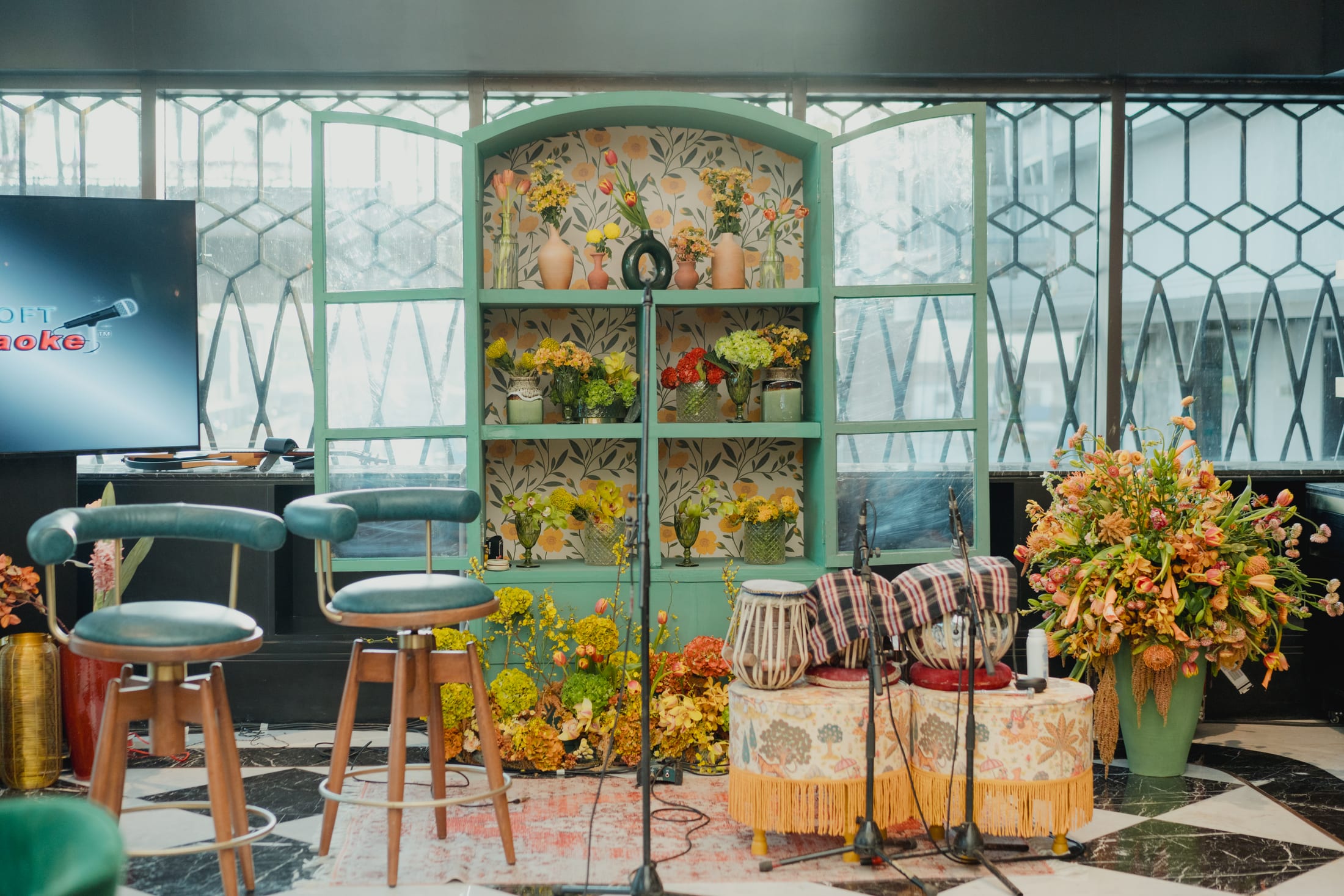
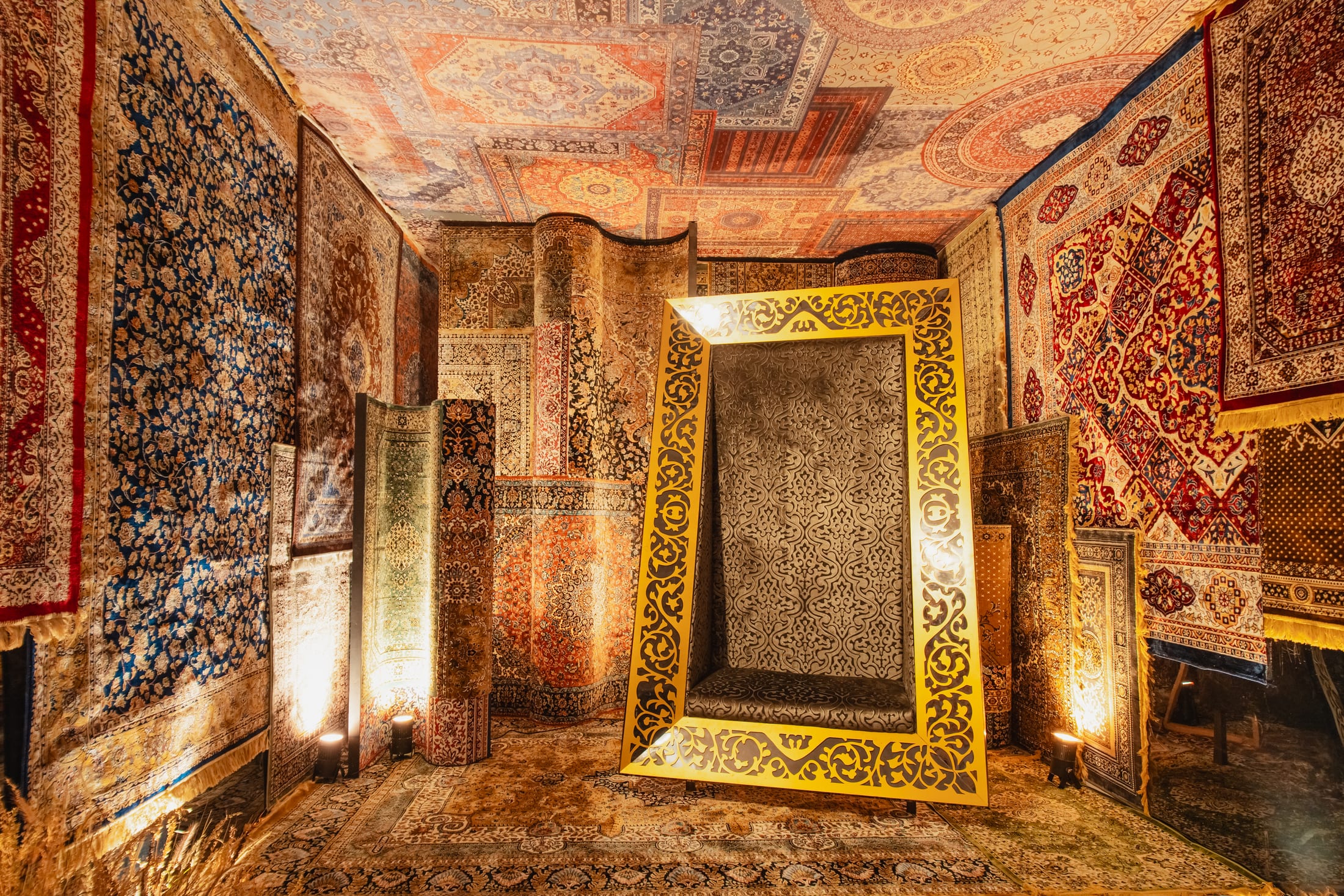
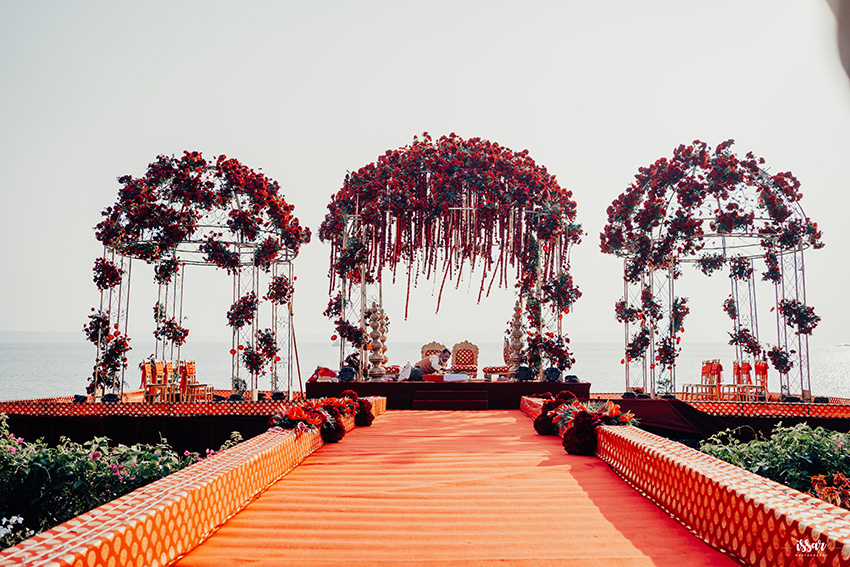
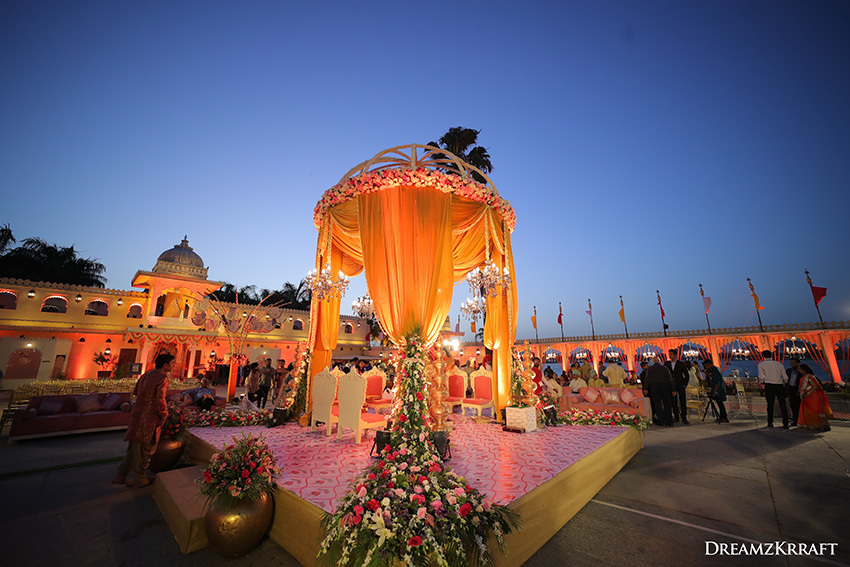
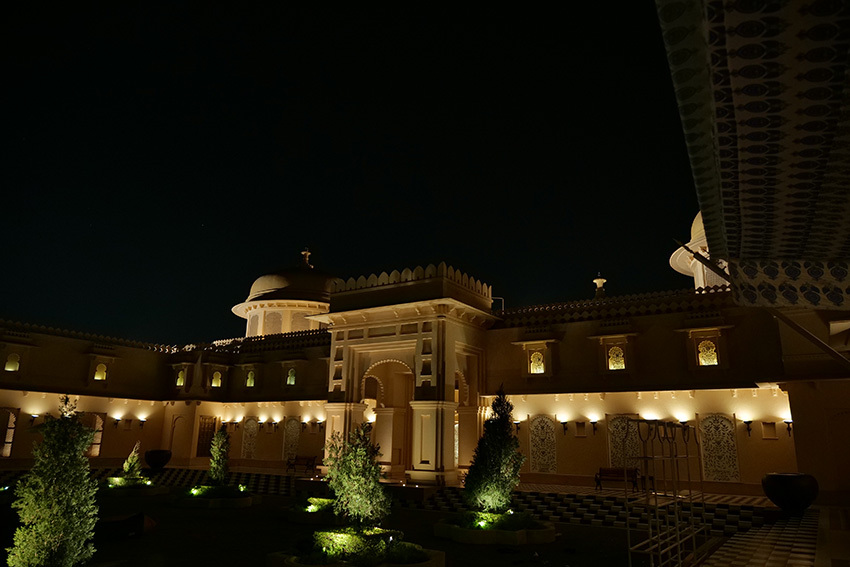
Our co-founder spent years as a production designer on films including Rock On!, Don, Delhi Belly, Talaash and Made In Heaven. Building convincing worlds at scale, on deadline, became the founding discipline of the studio — and the lens through which we still approach design.
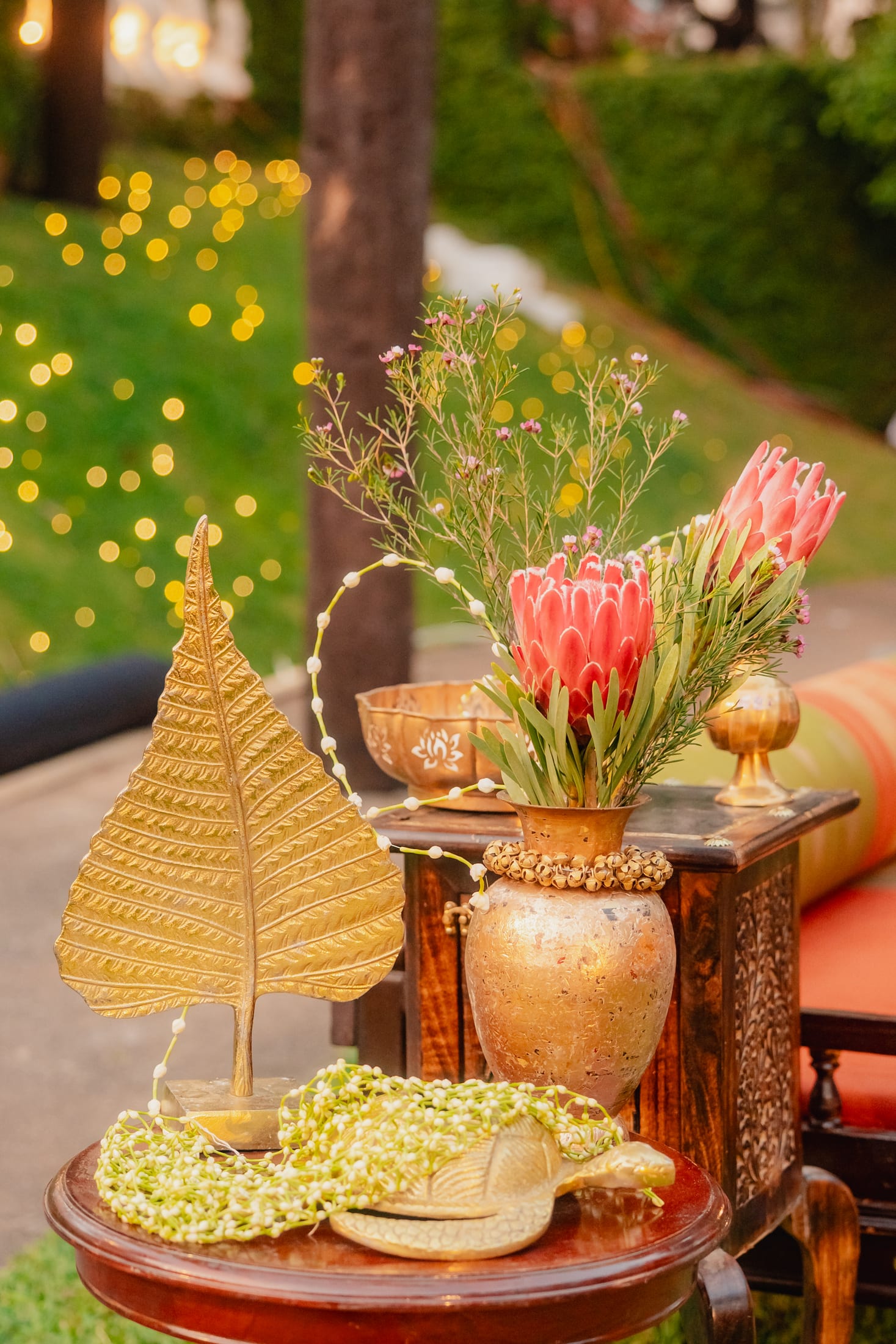
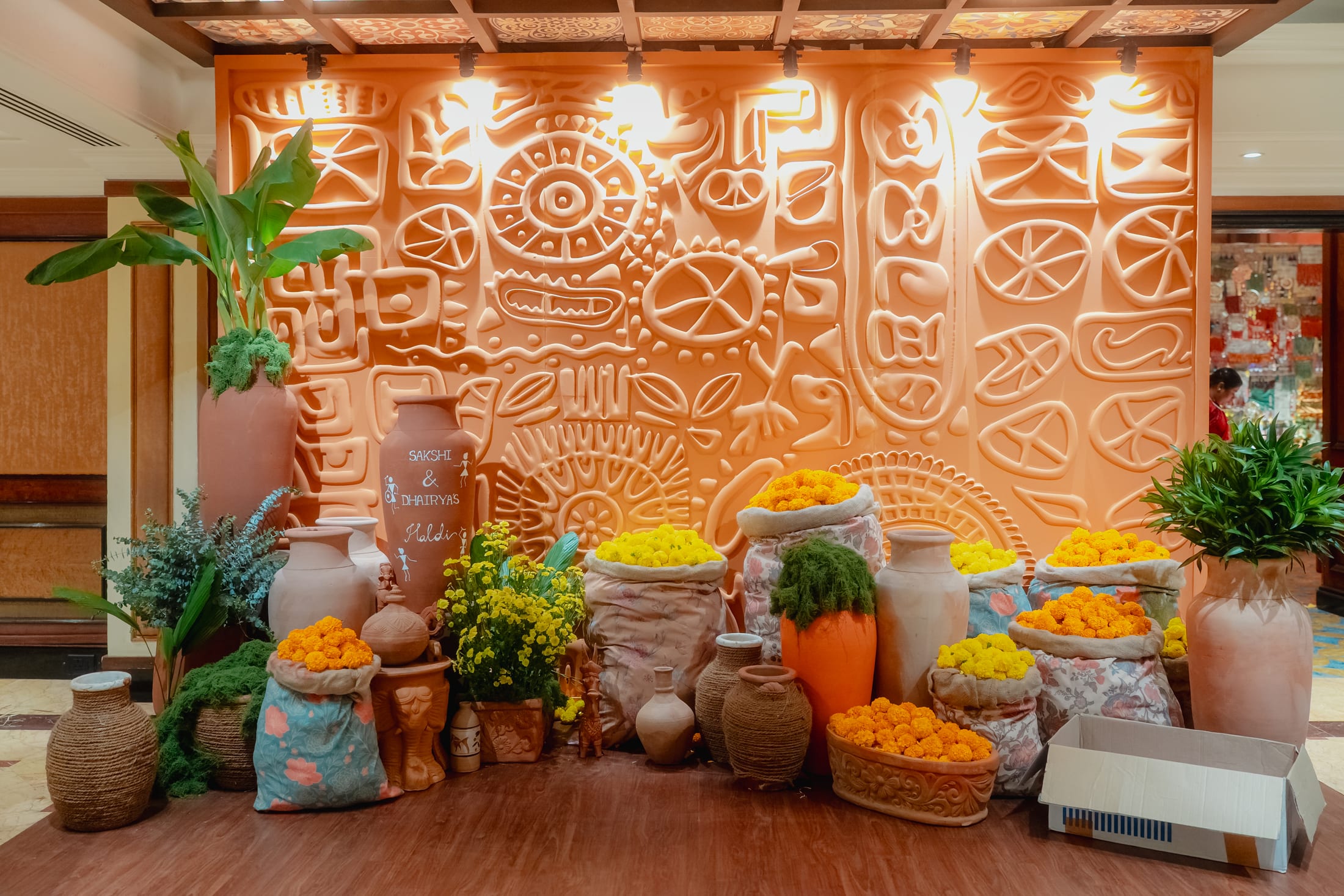
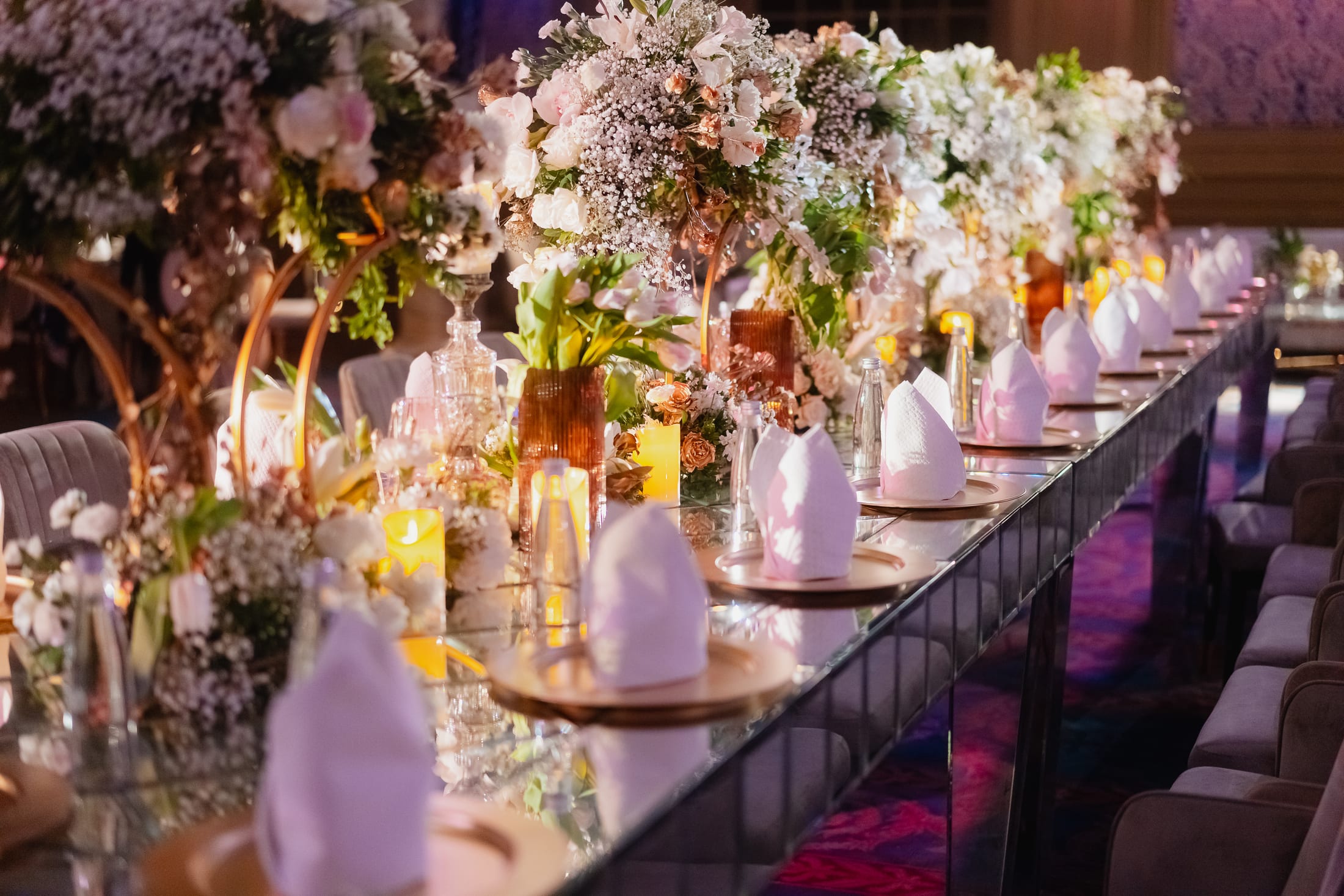
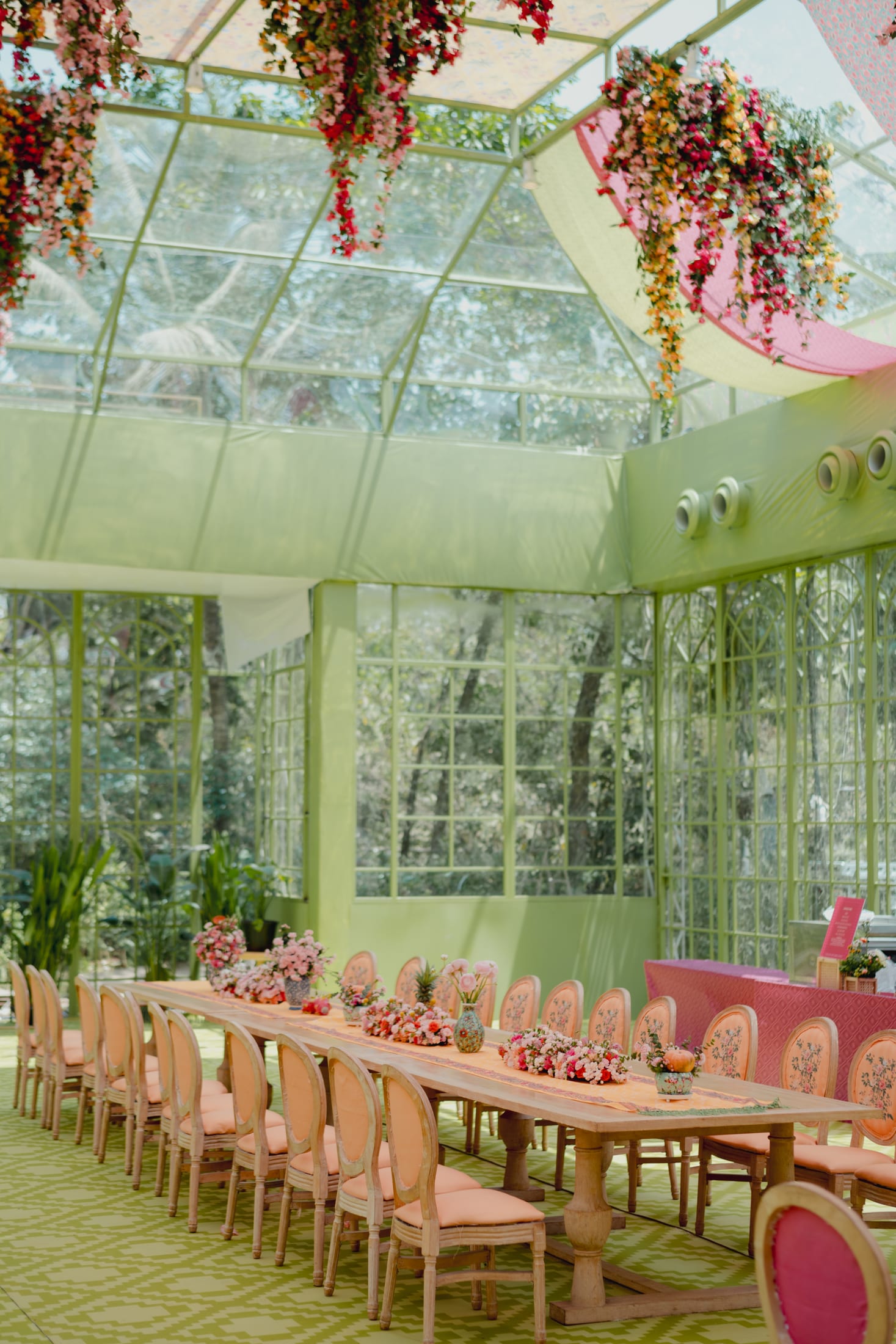
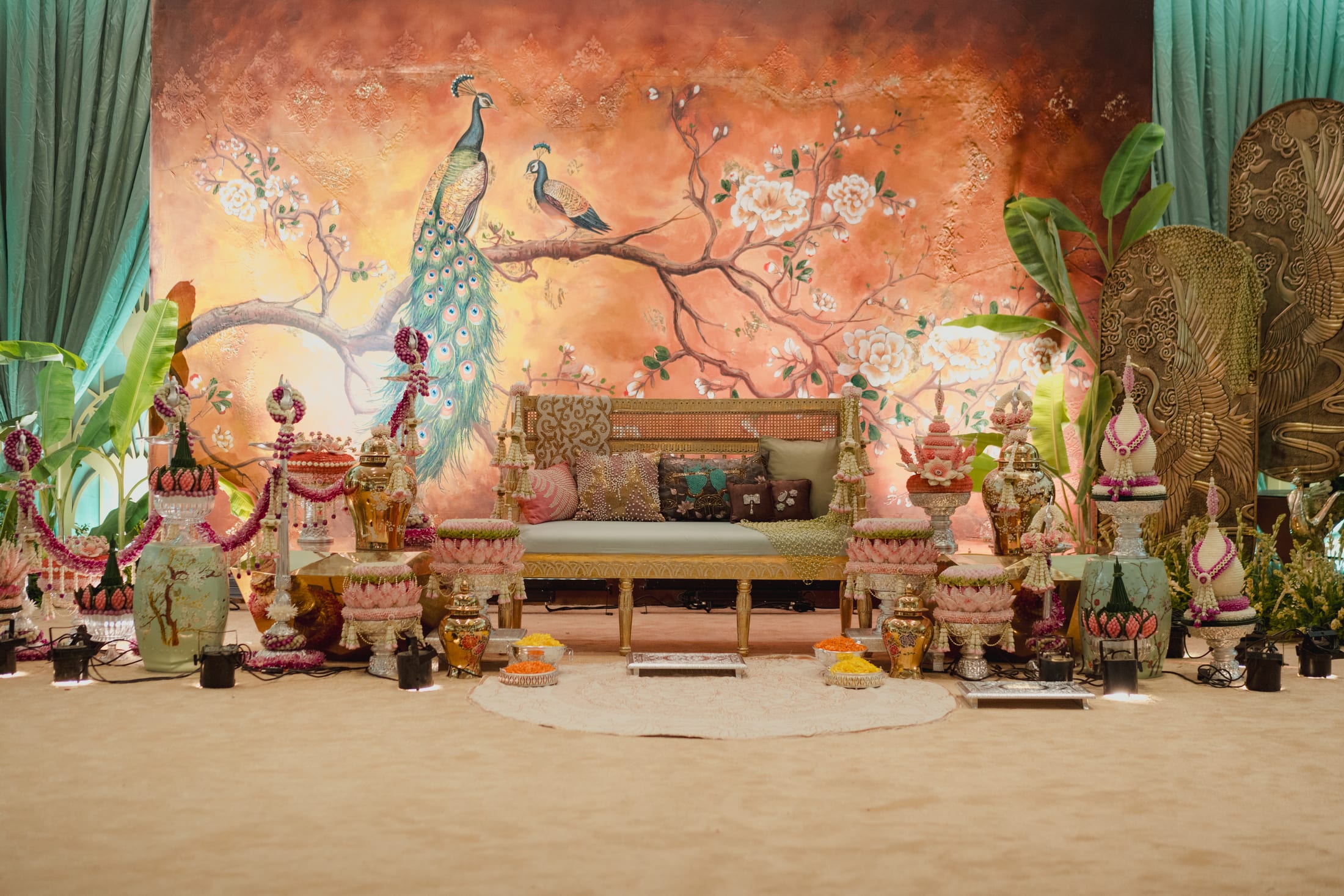
Design and décor by DreamzKrraft
Atmosphere is engineered
A film set teaches that mood is built, not stumbled upon. Light, colour, proportion and timing are all decisions, and emotion is the sum of a thousand of them made correctly. We bring that same rigour to a wedding: every space is designed to carry a feeling, not just to look beautiful.
A film set teaches you to build a world. A wedding is simply the most personal world there is.
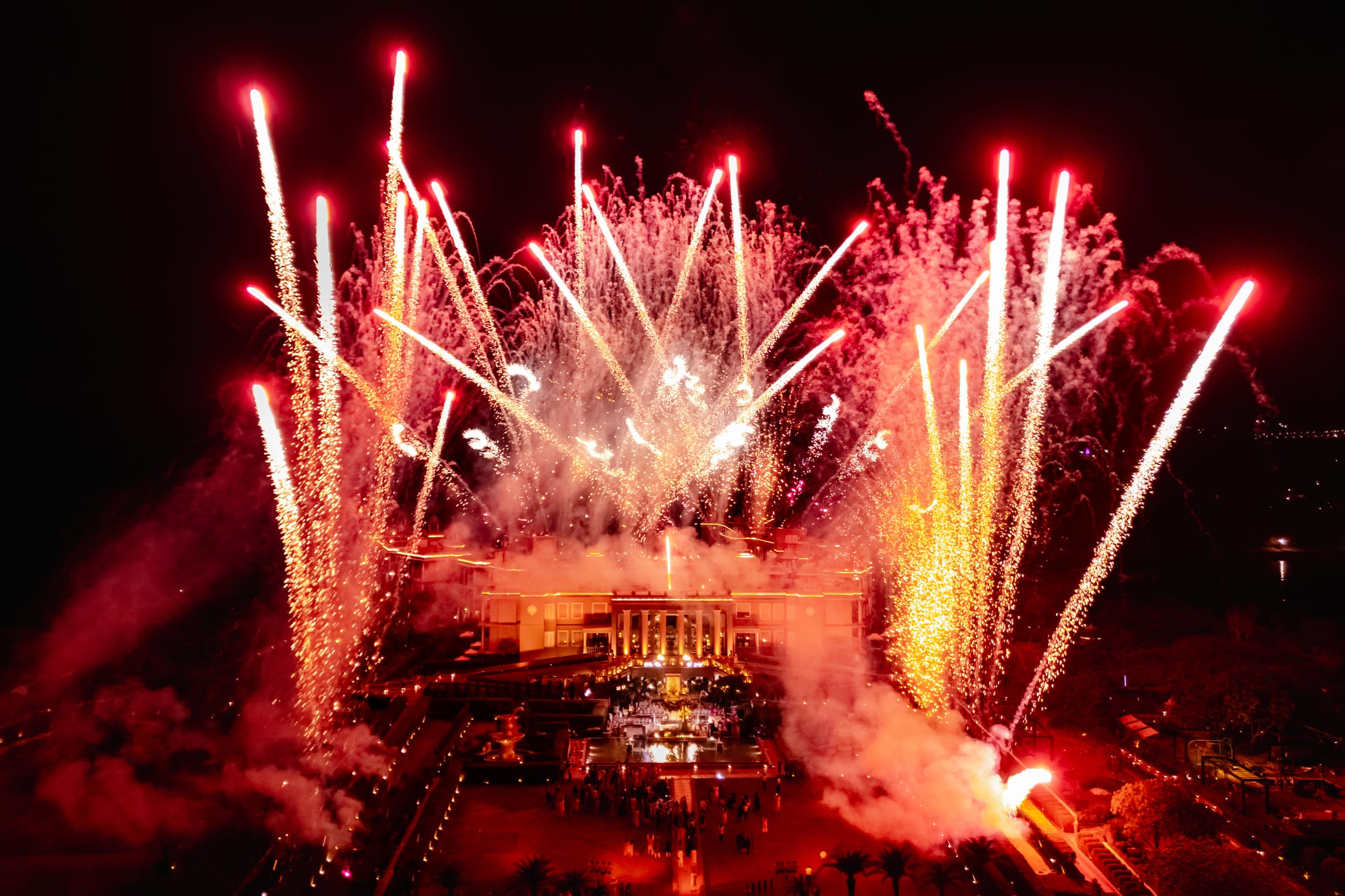
Design and décor by DreamzKrraft
Lighting, pacing and the reveal
Cinema thinks in lighting as emotion and in pacing — the build toward a reveal. A wedding has the same grammar: the first sight of the mandap, the shift from cocktails to dinner, the moment the couple enters. We choreograph these beats so the evening rises and lands like a well-cut scene.
Spatial storytelling at full scale
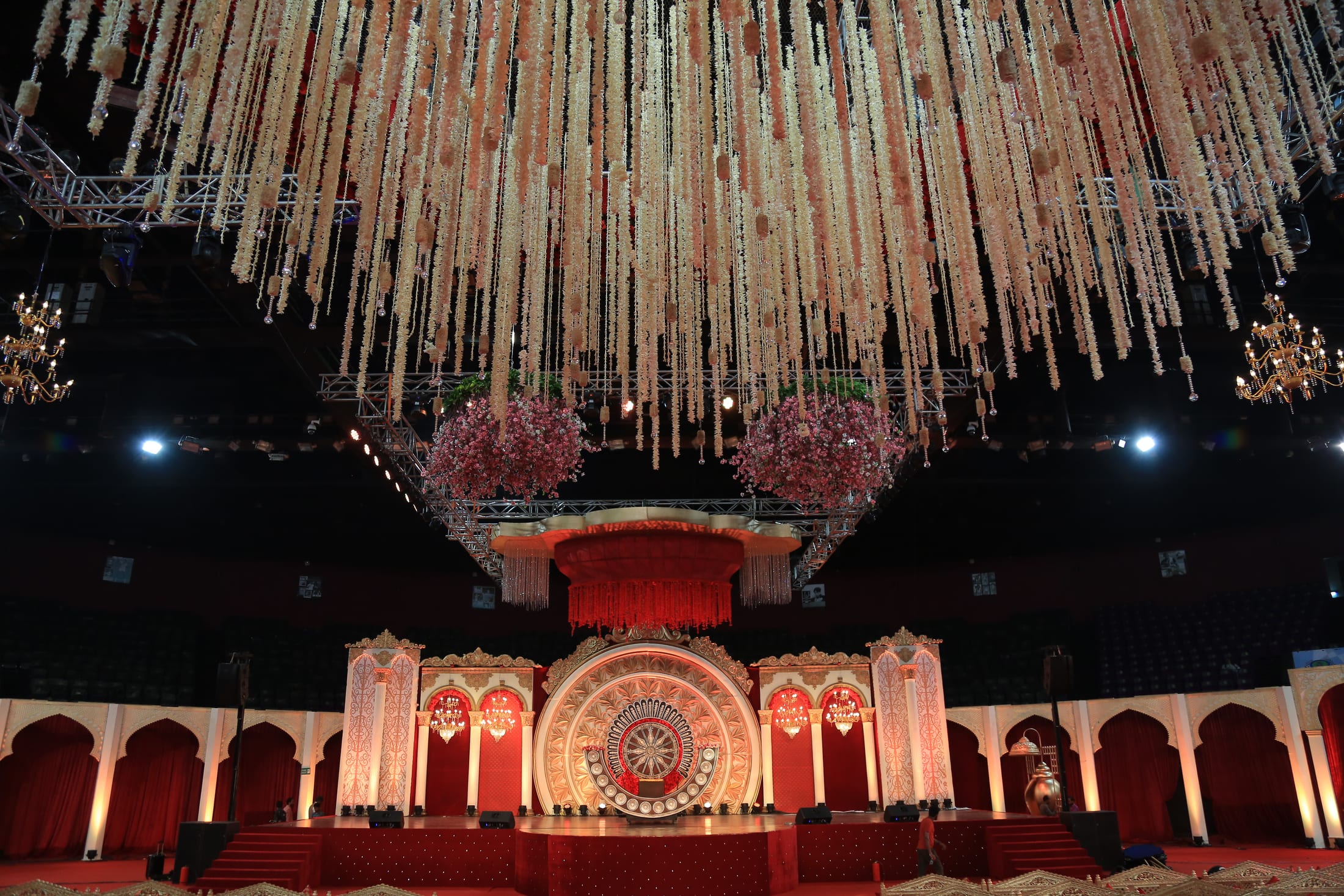
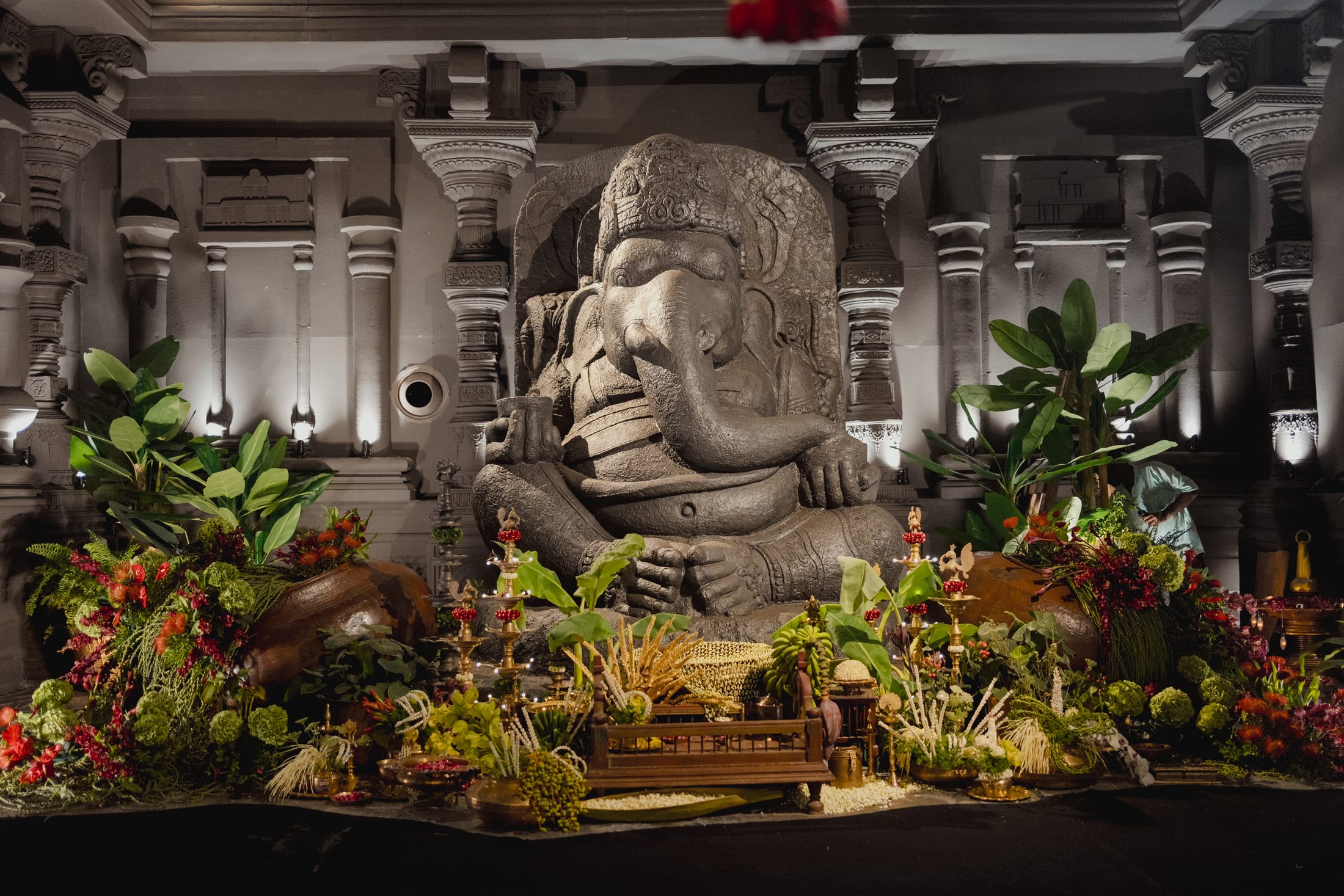
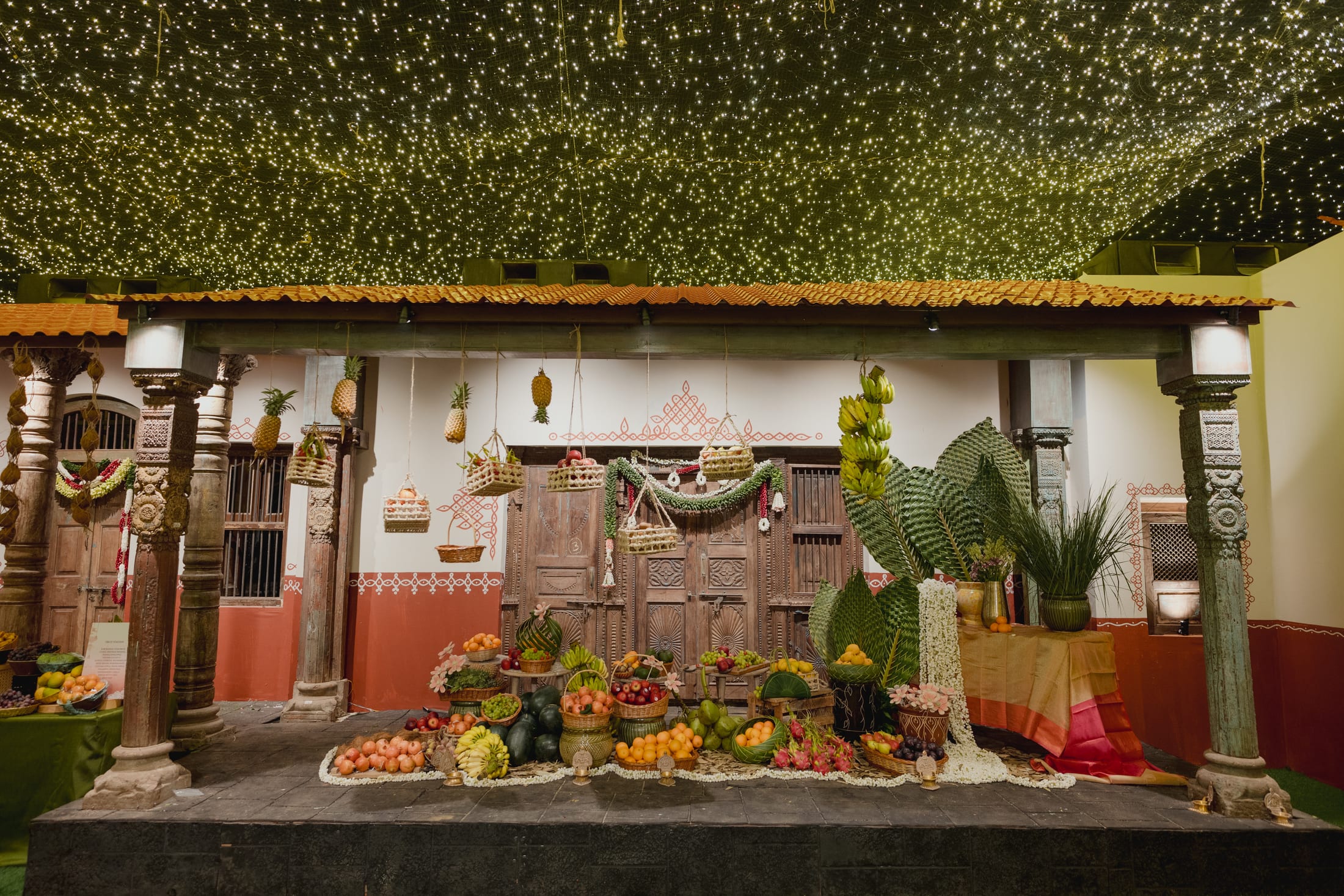
Nowhere is the film inheritance clearer than the Shetty wedding, where we recreated a Mangalorean temple — a 12ft Ganesha, 250+ carved pillars, 5,000 artisans — so guests did not look at a set but walked inside a world. That is production design, applied to celebration. To bring this sensibility to your wedding, contact our team.
Engage your planner and define the wedding’s concept and feeling. Set the budget shape and draft the guest list. Most importantly, secure your venue and date — the decisions everything else depends on. Begin thinking about the overall design direction.
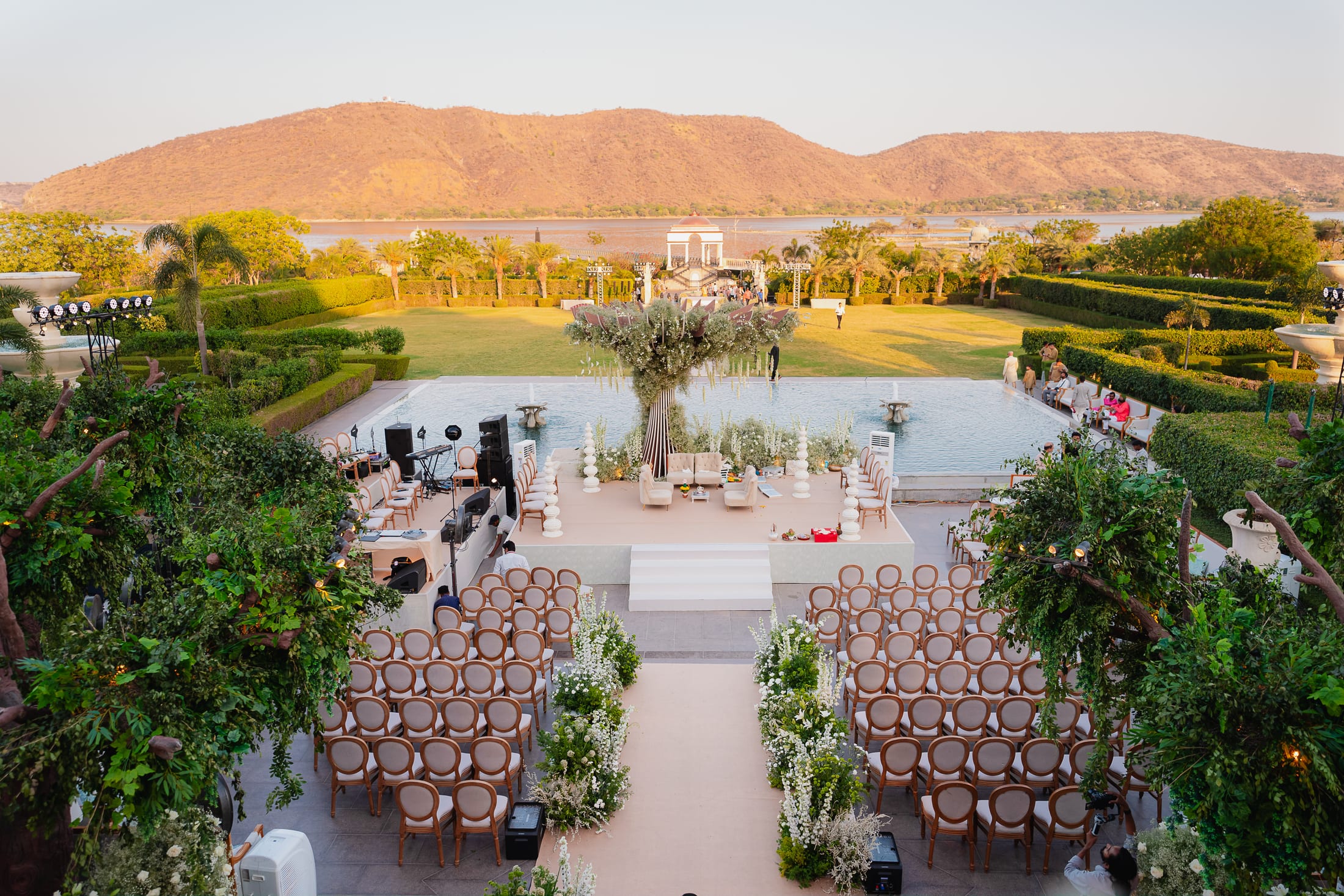
Planning and production by DreamzKrraft
14–10 months: design and core vendors
Develop the visual language for each function and lock the specialists that book out early — photography, headline entertainment, catering. For destination weddings, confirm room blocks and start transport and logistics planning. The wedding’s look begins to crystallise here.
Planning and production by DreamzKrraft
9–6 months: production planning
Concepts become buildable: floral and fabrication plans, lighting and staging, menus and tastings, the entertainment programme. Send save-the-dates and open guest communications. This is where in-house production capability — a 40+ team and a 60,000 sq.ft. warehouse — converts design into engineered plans.
Eighteen months, used well, is the difference between a wedding that is arranged and one that is designed.
5–2 months: confirmation and detail
Finalise guest numbers, seating and the master production schedule. Issue formal invitations. Confirm every vendor call sheet and the hospitality plan for arriving guests. Write the contingency plans now — weather, timing, logistics — so nothing is improvised later.
Final 8 weeks and wedding week
Refinement and calm: confirmations, rehearsals, welcome experiences for early arrivals, and on-site build in the final days. By the wedding itself, the couple’s only role is to be present. To map your own 18-month plan with us, contact our team.
A self-managed luxury wedding can consume hundreds of hours — sourcing vendors, comparing quotes, chasing timelines, mediating opinions. A planner absorbs all of it, returning that time to you. Just as importantly, they end decision fatigue: instead of a thousand open questions, you make a handful of meaningful choices and trust the rest to expertise.
Planning and production by DreamzKrraft
Money saved
Counter-intuitively, planning often protects the budget. Established houses bring vendor relationships and rates that individuals cannot access, and they allocate spend toward what guests actually feel rather than what merely looks expensive. Above all, they prevent the costly mistakes — wrong venue, mistimed bookings, over-ordering — that quietly inflate a self-managed budget. Our approach to budget stewardship is built around felt impact.
The fee buys back your hours, your budget’s sense, and your peace — so the day is yours to enjoy.
Planning and production by DreamzKrraft
Stress eliminated
The least measurable benefit is the most valuable. A single point of contact means one team carries the worry, the contingency planning and the on-ground problem-solving. The midnight “what if it rains” question is theirs, not yours.
The real return: presence
The ultimate saving is presence. Couples who plan their own weddings often spend the day working; couples who are well-supported spend it living. To find out what that would look like for you, contact our team.
When a decorator, a planner, a production company and a caterer all work in parallel, the seams show: clashing aesthetics, finger-pointing when something slips, and a couple forced to become the project manager of their own wedding. Complexity that no single party owns is complexity that lands on you.
Planning and production by DreamzKrraft
What end-to-end actually means
End-to-end means one team carries the wedding from first idea to final send-off — concept, design, custom fabrication, logistics, hospitality and on-ground delivery. At DreamzKrraft, that is not outsourced; a 40+ creative team and a 60,000 sq.ft. warehouse keep it in-house.
Fragmented vendors deliver a wedding. One house delivers a world that holds together.
Planning and production by DreamzKrraft
One vision, every function
The reward is coherence. When the same house designs the mehendi, the sangeet and the wedding, they read as chapters of one story rather than three separate events. The full scope of our services exists so that nothing falls between disciplines.
Accountability you can feel
Most of all, end-to-end planning means a single point of accountability. If something needs solving at midnight before the wedding, there is no debate about whose job it is. That clarity is the quiet luxury behind every great celebration — and the reason families choose to work with us.
Everything starts with listening — to your story, your style and the priorities that matter most. This stage is less about décor and more about understanding the couple, because the brief that emerges here will guide every decision that follows.
Planning and production by DreamzKrraft
2. Concept and experience design
Next, we craft the aesthetic, the atmosphere and the overall guest experience. The wedding’s narrative takes shape: how it looks, how it flows, how it feels to move through. For Samya & Shivam, that meant balancing edgy contemporary art with a devotional tribute to Shiva and Parvati — a concept defined long before the first install.
Seamless is not luck. It is five stages of decisions, made early, so the day can simply unfold.
Planning and production by DreamzKrraft
3. Planning and coordination
Now the logistics: budgets, timelines, venues and hospitality, all mapped into a master schedule. The Rutuja & Jinesh celebration even ran on a dedicated wedding app, keeping guests updated in real time — coordination made invisible.
4. Vendor and production management
With the plan set, we curate and oversee every specialist — décor, entertainment, technicals and partner teams — while our in-house production builds what cannot be sourced. For the Shetty wedding, that scaled to 5,000 artisans and a 100,000 sq.ft. build across three Mumbai venues, executed in under three weeks.
5. Seamless execution
The final stage is delivery: end-to-end, on-ground management ensuring every detail lands exactly as designed. This is where the months of preparation become a single, calm, flawless experience. To see how it would work for you, contact our team.
This is the thinking phase. Engage your planner, define the celebration’s concept and feeling, set a realistic budget shape, and draft the guest list — because guest count drives venue, scale and spend. Shortlist and secure your venue and date, ideally before anything else is booked.
Planning and production by DreamzKrraft
13–9 months out: design and key vendors
With the foundation set, design begins in earnest: the visual language, décor direction, and the look of each function. Confirm the specialists that book out early — photographers, key entertainment, caterers. For destination weddings, secure room blocks and begin transport planning now.
Planning and production by DreamzKrraft
8–5 months out: production and detail
The concept becomes buildable. Finalise floral and fabrication plans, lighting and staging design, menus and tastings, and the entertainment programme. Invitations and guest communications go out. This is where a house with in-house production — a 40+ team and a 60,000 sq.ft. warehouse — turns ideas into engineered reality.
The luxury of great planning is that, on the day, the couple has nothing left to do but feel it.
4–2 months out: confirmation
Everything is pinned down: final guest numbers, seating, the master production schedule, vendor call sheets, and the hospitality plan for arriving guests. Contingency plans — weather, logistics, timing — are written now, not improvised later.
Final month and wedding week
The last weeks are for refinement and calm: confirmations, rehearsals, welcome experiences for early-arriving guests, and on-site build. By the wedding day itself, the couple’s only job is to be present — the team carries the rest. To plan your own timeline with us, contact our team.
The ideal moment is just after you are engaged, before any vendor is confirmed. This is when a planner can shape the wedding’s direction — its scale, season, location and feeling — rather than working within decisions already made. DreamzKrraft does its most valuable thinking in these early conversations.
Planning and production by DreamzKrraft
Before you book the venue
Couples often book a venue first and a planner second. It is usually the wrong order. The venue determines guest capacity, logistics, production possibilities and a large share of the budget. A planner who is involved before the venue decision can match the space to your vision — and flag the constraints a beautiful but impractical venue will impose.
A planner is most valuable before the first big decision — not after the hard ones are already made.
Planning and production by DreamzKrraft
18–24 months out for destination weddings
If you are marrying abroad or at a sought-after palace, the calendar tightens fast. The best destination venues are committed 18–24 months ahead, and international logistics — room blocks, transport, permits, vendor travel — reward a long runway. Engaging a planner early is often the difference between your first-choice date and a compromise.
The signs you have waited too long
Decision fatigue, a spreadsheet you dread opening, vendors giving conflicting advice, a budget that keeps drifting — these are signals that the celebration has outgrown self-management. The cost of waiting is rarely just stress; it is the money lost to choices that a planner would have steered differently. When you are ready, contact our team to begin.
Traditional planning is, at heart, coordination: booking trusted vendors and keeping them on schedule. Luxury planning begins a step earlier, with creation — defining a concept and visual language before anything is booked. At DreamzKrraft, the wedding is designed as a world, then realised.
Planning and production by DreamzKrraft
Eight dimensions where they part ways
The clearest way to see the gap is dimension by dimension:
Vendors: outsourced and coordinated → a 40+ in-house creative team.
Décor: rental and off-the-shelf → custom fabrication in a 60,000 sq.ft. warehouse.
Timeline: day-of management → a 12–18 month design process.
Scope: logistics → design, production, hospitality and execution.
Guest experience: a guest list → a designed guest journey.
Production: what the venue offers → staging and lighting built to concept.
Personalisation: theme templates → a narrative drawn from the couple.
Accountability: many contracts → one team, one point of contact.
Traditional planning asks “is everything booked?” Luxury planning asks “how will every guest feel?”
Planning and production by DreamzKrraft
Rented versus built
The most visible difference is fabrication. A traditional setup draws from a catalogue of available décor; a luxury house builds to specification. For the Shetty wedding, our team recreated an entire Mangalorean temple complex — over 100,000 sq.ft., 250+ carved pillars — because the family’s story demanded it. That is not something you can rent.
The experience, not just the event
Luxury planning treats the guest’s whole experience as the product: the welcome, the flow between functions, the food, the entertainment and the hospitality. The wedding is not only seen, it is felt — which is precisely the standard our end-to-end services are built around.
Before a single vendor is booked, a luxury planner defines the idea of the wedding — its atmosphere, its narrative, the feeling guests should carry home. At DreamzKrraft, that instinct is inherited from cinema: our founders began in film production design, where a world is conceived before it is built. The result is a celebration that feels authored rather than assembled.
Creative direction is what separates a beautiful wedding from a memorable one. It is the through-line that makes the mehendi, the sangeet and the wedding feel like chapters of one story instead of three unrelated parties.
Planning and production by DreamzKrraft
Production and fabrication
The grandest ideas mean nothing without the capacity to build them. A true luxury house owns its production: a 40+ person creative team and a 60,000 sq.ft. warehouse let us fabricate sets, mandaps and installations to exact specification rather than renting whatever is available. It is the difference between décor and architecture.
A luxury planner does not decorate a day — they author a world and then build it, end to end.
Planning and production by DreamzKrraft
The eight things we actually manage
Across a typical engagement, the work resolves into eight core disciplines, each demanding its own expertise:
Creative direction — the concept, narrative and visual language of the celebration.
Design and décor — florals, styling, installations and bespoke fabrication.
Production — staging, lighting, sound and technical delivery at scale.
Vendor and partner management — curating and overseeing every specialist team.
Budget stewardship — allocating spend where it creates the most felt impact.
Guest experience design — arrival, hospitality, flow and personalised touches.
Logistics and timelines — the master schedule that keeps everything on track.
On-ground execution — flawless delivery across every function and venue.
Guest experience and hospitality
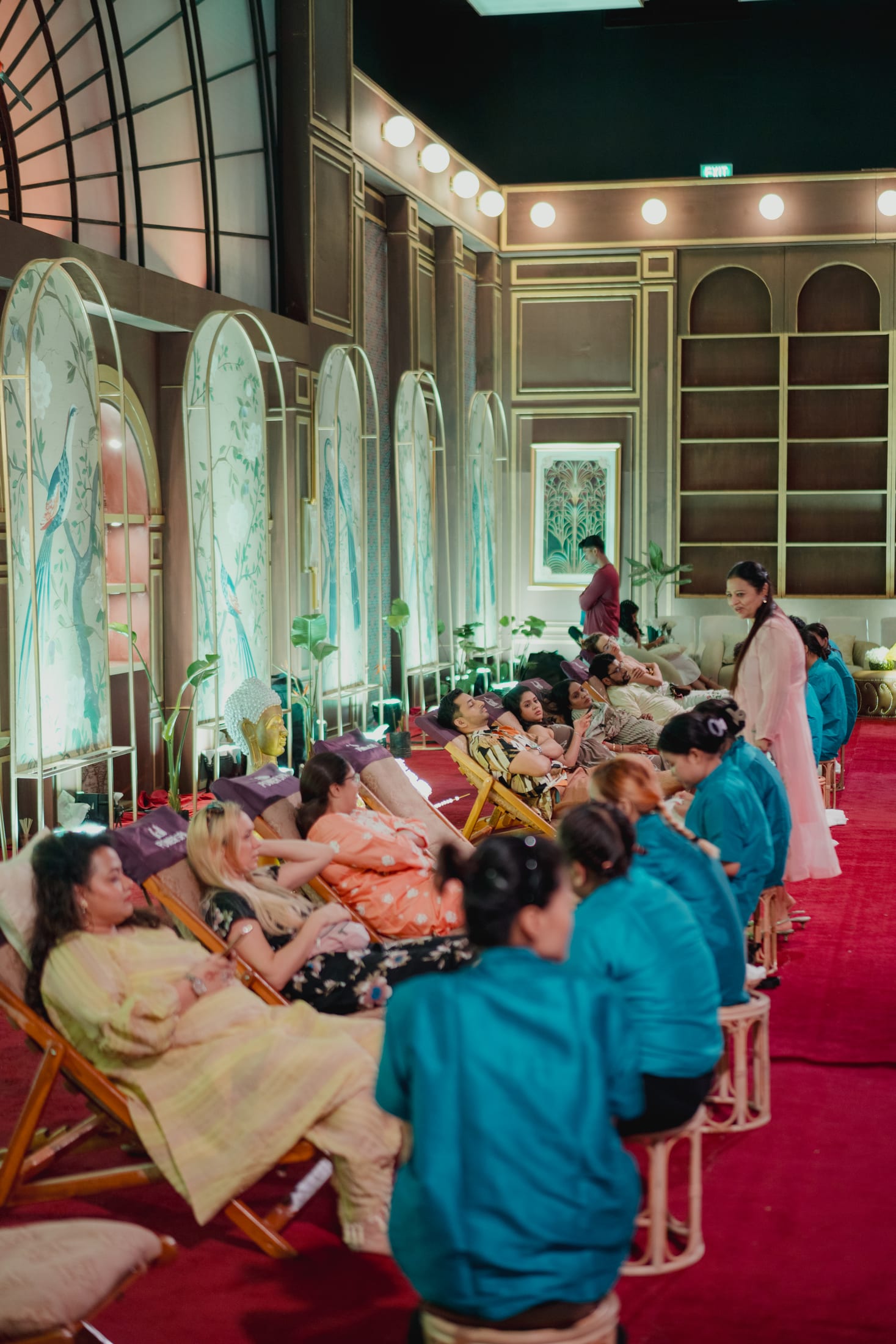
Modern luxury is measured less by how impressive a wedding looks and more by how every guest feels. Planners design the welcome, the wayfinding, the food and the small personal gestures that make hundreds of people feel individually considered. Our services treat hospitality as a design discipline in its own right.
A single point of contact
Perhaps the most underrated thing a planner does is absorb complexity. Instead of managing a dozen vendors, contracts and timelines, the couple speaks to one team that orchestrates them all — and carries the contingency planning, the late-night problem-solving and the on-site command so the family never has to. To understand what that looks like for your wedding, contact our team.
Ooh, those words stir up a feeling of such excitement and you immediately start conjuring up images of sandy beaches, pool ceremonies and historic venues. But hold your horses. A destination wedding needs a lot more planning and careful consideration than getting married in your hometown. You will be going to a completely new country, maybe one that you’ve never been to before, with a new culture, for one of the most important days of your life.
So when planning a destination wedding, here are some things you should keep in mind.
You may choose to plan and execute your wedding on your own when the venue is local, but with a destination wedding, you’ll feel much more comfortable with a wedding planner on board. That way you don’t have to worry about figuring out local transport or hotels for your guests, tie-ups with good vendors, any local processes or red tape, or anything else that will run you ragged and leave you unable to enjoy your special day.
Take every little thing into consideration. Ease of travelling locally, food preferences, availability of whatever you need for the wedding rituals, the logistics of flying in your family members and putting them up in hotels, the budget, whether or not getting vendors or extra help will be expensive, photography and videography; every little thing will have to be planned.
3. Consider unexpected expenses when planning your destination wedding
When it comes to unexpected expenses, destination weddings can become a money-suck. So make sure you account for every possible expense. This would include travel costs, any gratuities or tips, any shopping or entertainment expenses and so on.
4. Safety
While it’s important to know whether a particular country is safe or not, it’s equally important to know whether your friends and family will feel safe there. While a country may be perfectly safe, if the perception is different, your guests will be reluctant to attend.
5. Be considerate of the guests attending your wedding
What does that actually mean? They are your guests. You will of course take care of them as the ideal host. But with a destination wedding, things are a little different. A straight-forward ‘save-the-date’ will not be enough. You will need to go overboard! Beyond the basics of your wedding (where, when, timings, menu choices), let people know how to get the best out of their time in the country. Have a detailed FAQs section all about transportation, activities, local language phrases and practical health care tips. Look into local accommodation options at different price points and provide links to them. The more information you give, the better experience your guests will have.
6. Budget for destination wedding
It goes without saying that you will have to find a location that fits your budget. But you will also have to consider your guests. What are you ok paying for and what will you need your guests to contribute for? Be very clear on that.
Now if you look at the list, you’ll see that all the earlier points tie in with the last one: the budget. And this is usually the million-dollar question, isn’t it?
What sort of a budget should you set aside for a destination wedding? And what should you even take into consideration?
Location, time of year, size of the wedding, decor, clothes—almost everything influences your destination wedding cost. Destination weddings come with expenses that aren’t otherwise involved with the planning of a traditional wedding. Travel expenses—like flights and rental cars—along with lodging are the two biggest costs that couples and guests will have to fit into their budgets. So start with those and your wedding venue. These three pieces will likely make up the bulk of your budget.
So let’s break your dream destination wedding down.
1. The very first step is to sit down, hash out the various destination options and measure their feasibility very carefully.
By this, we don’t necessarily mean the obvious costs like the venue, catering and decoration. While these costs are very important, it’s the seemingly hidden costs that actually build up in the end. So figure out what packages the venue is offering, what is included and what is not.
While food may be included, the decor may not. The photographer and videographer most certainly won’t be. Besides that, wedding favours for the guests, the food and stay costs for the guests, the DJ.
2. Next, comes the airfare.
The airfare is usually the largest cost and a non-negotiable one. Plus, if you are taking care of the airfare for your guests, this will go up further. But here’s a tip that will make this cost much more palatable. Since you’ll already be at your dream destination, you won’t have to spend separately on your honeymoon. So club that expenditure along with your wedding expenditure and you will have more wiggle room in your budget.
3. Then, let’s look at the accommodations.
Accommodation is the next big non-negotiable expenditure on the list. And again this goes up when you add in the expense of putting up the guests. But there are a couple of ways of saving money here. Book your rooms well in advance to take advantage of discounts on bulk. It is also good to keep in mind that when booking at an all-inclusive hotel or resort, there will be special amenities and romantic touches that come included.
4. Ask for wedding packages
The great thing about a destination wedding venue is that it includes much more than just the basic venue if you’re at an all-inclusive resort. Couples can expect basic inclusions like the ceremony set-up, cocktail hours, wedding flowers, and more.
Vendors are a huge part of any wedding ceremony and depending on the number of them, they can become expensive. Start with connections and recommendations that your wedding planner can help with as those would be more cost-effective.
And finally, let’s narrow down the actual venue for your destination wedding.
The best way of doing this is to choose one that has some significance to you and your partner. But if there isn’t any place that matches that description, then we have some tips right here.
1. Assess the ease of getting accommodations around the venue.
You don’t want to go to a strange country and have to figure out the travel options between your hotel and the venue, especially when you and your guests will have to make that trip multiple times. So choose a venue that has plentiful and cost-effective accommodations nearby.
2. Check out the infrastructure and facilities.
Make sure the facilities at the venue will work for the type of ceremony you are planning. For example, Catholic ceremonies in Mexico can only be performed in sanctified locations, so there is no way to have a Catholic ceremony on the beach. Think about what you need. Will you need a havan-kund for the pheras? Do you require a kosher meal? Are you planning a South Asian wedding? A Buddhist wedding ceremony? Be clear on what your requirements are.
If your venue has vendor tie-ups in place, it will just make your job that much easier. You won’t have to waste time hunting for them.
So now, let’s get to the exciting part. Which country should you choose for your destination wedding?
1. USA
America is one of the best locations for a destination wedding. There are very few countries that can boast of such diverse terrain.
Hawaii always tops the list. And with good reason. Black sand beaches, mountain peaks, private beaches and stunning sunsets all make gorgeous backgrounds for wedding photos.
Next in line are Napa Valley, California, Los Angeles, Las Vegas and New York.
2. Canada
Alpine ranges, mystical forest landscapes, bright autumn trees, and magical snowy winters, Canada is a truly surreal country with the most breathtaking views you could imagine. So take a trip up to the land of the maple leaf and ice hockey and experience an unforgettable destination wedding in the north.
3. Europe
Not much could be more romantic than a destination wedding in Europe, a continent full of history, including the location of some of the greatest love stories of all time. Choose from a number of beautiful European wedding venues in Ireland, Scotland and Italy, just to name a few. Whether you dream of being married in a Tuscan villa, romantic cathedral or a medieval castle, Europe has plenty of venues and wedding packages for any couple’s budget. Your European destination wedding ceremony and attire can be as simple or lavish as you wish. Spend your time in Europe taking in the breathtaking views and landscape, visiting amazing historical sights and enjoying starry nights in the countryside.
4. Australia
Australia has an amazing choice of world class wedding destinations. From seaside wedding resorts where 100+ guests can stay the weekend to romantic elopement destinations that sleep just the two of you, Australia boasts some of the world’s most picturesque wedding venues for getaway style celebrations.
When you think of a larger-than-life, luxurious destination, you automatically think of Dubai. In fact, if there’s one place that sparks instant romance (after Paris), it’s Dubai – a city where balmy afternoons turn into extravagant sundowners and majestic skyscrapers turn into heartwarming homes. There is absolutely nothing stopping you from having your dream wedding in Dubai – from world-class fireworks to having a celebration mid-air in Ain Dubai and then hosting a reception on a Yacht – you can have it all here.