Not every bridal detail needs to make a grand statement. Sometimes, the most beautiful choices are the ones that leave room for simplicity.
Bridal mehndi is one such detail. While intricate designs covering the hands and feet have long been a part of Indian wedding traditions, many modern brides are exploring a more understated approach. Delicate motifs, fine lines, carefully placed florals and minimal patterns are becoming appealing alternatives for those who prefer a refined aesthetic.
A bridal simple mehndi design does not mean compromising on tradition or detail. It is about being selective with the patterns, placement and overall composition. A small floral motif, an elegant mandala or a delicate trail extending across the fingers can create a look that feels personal without appearing overly elaborate.
At DreamzKrraft, we believe that the details of a wedding should reflect the people at its centre. Just as the décor, styling and celebrations are developed around the couple’s preferences, bridal mehndi can be approached as an individual expression of the bride’s personality.
Here are some simple bridal mehndi designs and styling ideas for brides who appreciate understated elegance.
1. Minimal Floral Mehndi
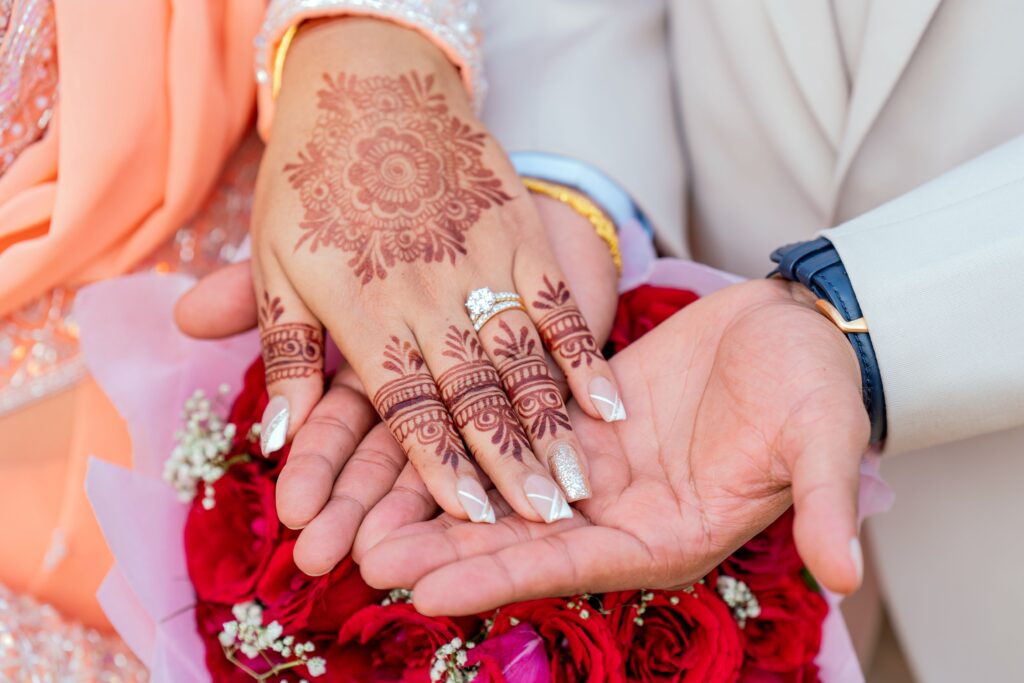
The look: Delicate florals with plenty of space between the patterns.
Floral motifs have always been a favourite in mehndi design. Their appeal lies in their versatility. They can be interpreted through intricate botanical patterns or simplified into small flowers, leaves and delicate vines.
For brides who prefer minimal designs, a floral pattern placed on the back of the hand, around the wrist or along the fingers can create a graceful finish.
Consider:
- Small floral motifs placed at intervals.
- Fine leaves and delicate stems connecting the patterns.
- A single statement flower on the back of the hand.
- Minimal detailing around the fingertips.
- A light floral trail extending towards the wrist.
The beauty of this design lies in its placement. Rather than filling the entire hand, the patterns create visual interest through carefully considered spacing.
This style works particularly well with contemporary bridal outfits, floral jewellery and softer wedding palettes.
2. The Minimal Mandala
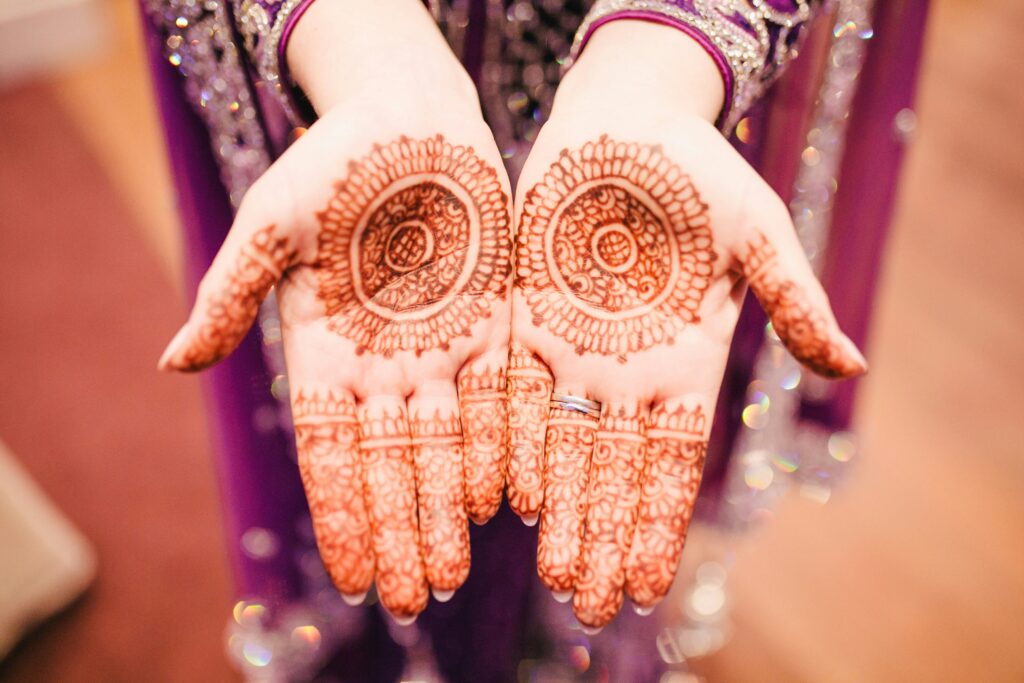
The look: A single circular motif that becomes the focal point of the design.
The mandala is one of the most recognisable elements in traditional mehndi. Its symmetrical structure and circular form make it visually distinctive, even when the design is kept relatively simple.
A minimal mandala can be placed at the centre of the palm or on the back of the hand, with fine detailing around its edges.
For a more contemporary interpretation, the surrounding patterns can be kept understated.
- A single central mandala.
- Fine concentric lines or petal detailing.
- Small dots and delicate accents.
- Minimal finger patterns.
- Open spaces around the central motif.
The result is a balanced design that retains a traditional reference without covering the entire hand.
3. Delicate Finger Mehndi
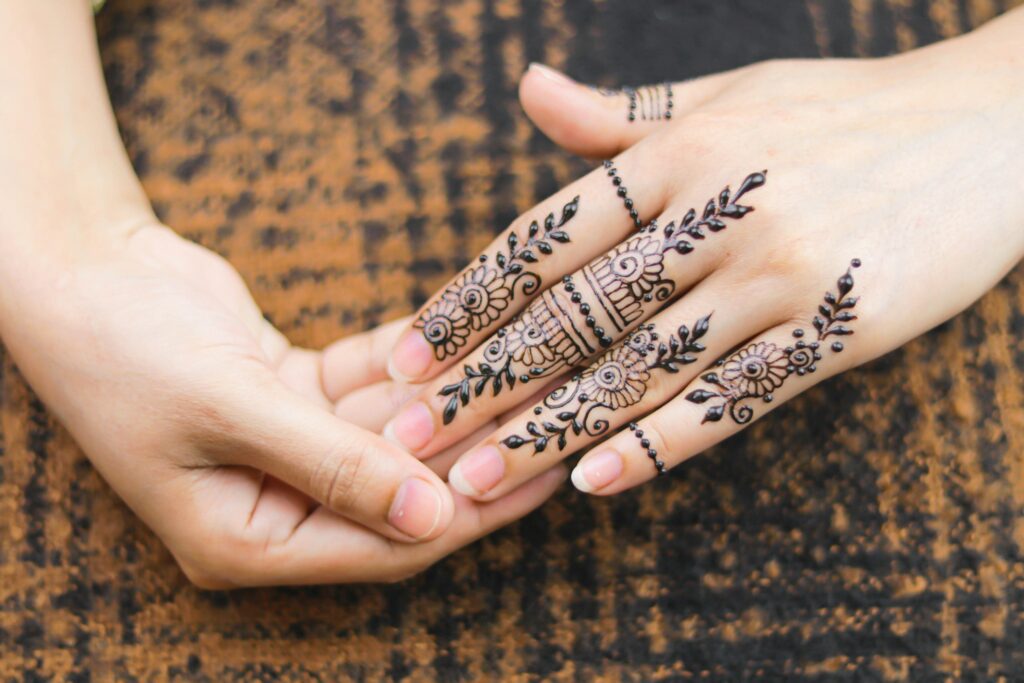
The look: Fine detailing concentrated around the fingers.
For brides who prefer a particularly understated aesthetic, finger mehndi offers an elegant alternative to full-hand designs.
The patterns can be inspired by jewellery, lacework or delicate geometric detailing. Small floral elements, fine bands and carefully placed dots create interest without making the design feel heavy.
Some popular interpretations include:
- Fine rings around selected fingers.
- Delicate floral patterns along the fingers.
- Lace-inspired detailing near the fingertips.
- Small motifs placed across the knuckles.
- Minimal patterns connecting the fingers to the wrist.
This style can be especially appealing to brides who want their engagement ring, wedding jewellery or hand accessories to remain visible.
The placement should be considered in relation to the bride’s jewellery and outfit so that the different elements complement one another.
4. The Elegant Wrist-to-Finger Trail
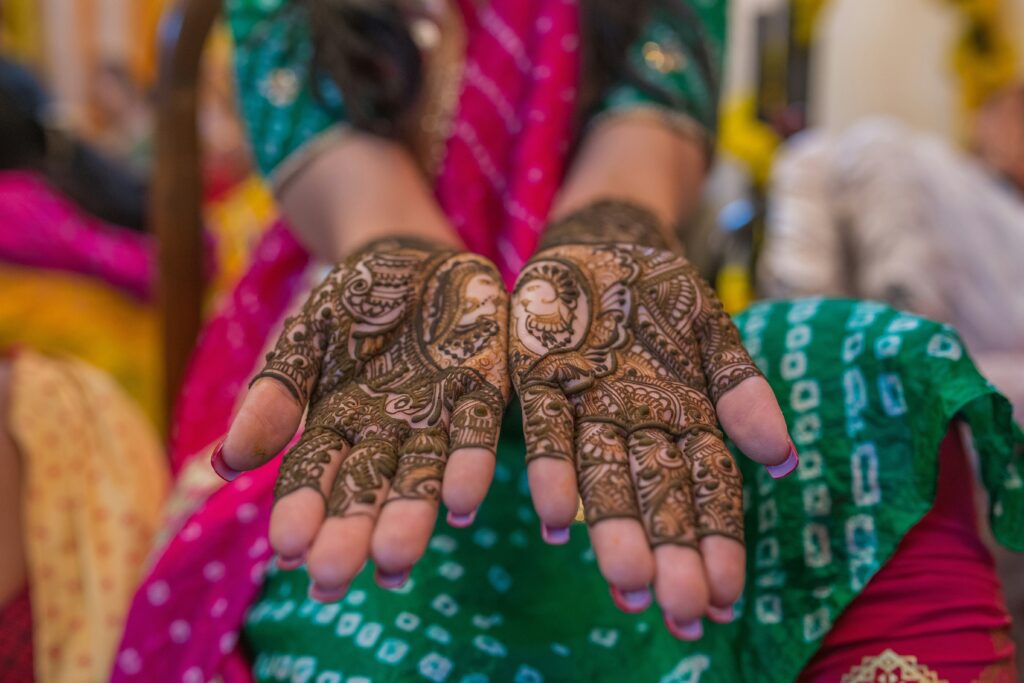
The look: A flowing design that connects the wrist to the fingers.
Instead of covering the palm, this design follows a more linear composition.
A delicate trail can begin near the wrist and extend towards one or two fingers, incorporating small flowers, leaves, dots and fine curves along the way.
The open spaces between the motifs give the design a lighter appearance, while the continuous pattern creates a sense of movement.
It can be customised through:
- A floral vine extending from the wrist.
- Fine botanical detailing along the side of the hand.
- Small motifs connecting the wrist to the fingers.
- A combination of curved lines and geometric accents.
- Selective detailing around the fingertips.
This is a particularly versatile bridal simple mehndi design because it can be adapted to different hand shapes, jewellery styles and bridal outfits.
5. Arabic-Inspired Simple Mehndi
The look: Bold floral trails balanced with open spaces.
Arabic mehndi is recognised for its flowing patterns, floral arrangements and diagonal compositions. Unlike some traditional Indian styles that cover larger areas with dense detailing, Arabic-inspired designs often leave more visible space between the motifs.
A simpler interpretation can feature a single floral trail moving diagonally across the hand.
The design may include:
- Large but minimally detailed flowers.
- Flowing leaves and curved stems.
- Fine shading within selected motifs.
- Open spaces between the patterns.
- Light fingertip detailing.
The contrast between the larger motifs and open areas gives this style its distinctive character.
For brides who want something traditional yet less intricate, Arabic-inspired mehndi can offer an effective balance.
6. Jewellery-Inspired Mehndi
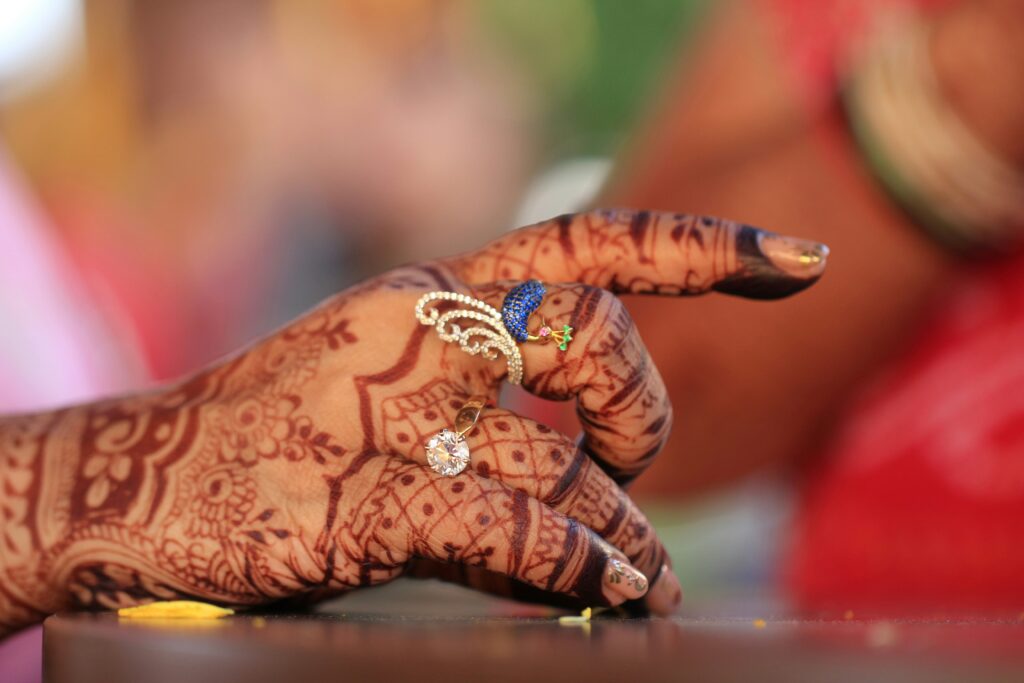
The look: Mehndi that resembles delicate hand jewellery.
Jewellery-inspired mehndi takes its cues from traditional hand accessories such as haathphool, rings, bracelets and delicate chains.
The design can be created to resemble a piece of jewellery extending from the fingers to the wrist, using fine lines and small decorative motifs.
Some interpretations include:
- A delicate chain connecting the fingers to the wrist.
- Ring-like patterns around selected fingers.
- A bracelet-inspired motif around the wrist.
- Small floral accents along the connecting lines.
- Minimal detailing that complements the actual bridal jewellery.
This style is particularly suited to brides who prefer a coordinated approach to their accessories.
The design can also be customised to complement the shape and detailing of the bride’s haathphool or bangles, creating a cohesive look without making the hands appear overly decorated.
7. The Half-Hand Mehndi Design
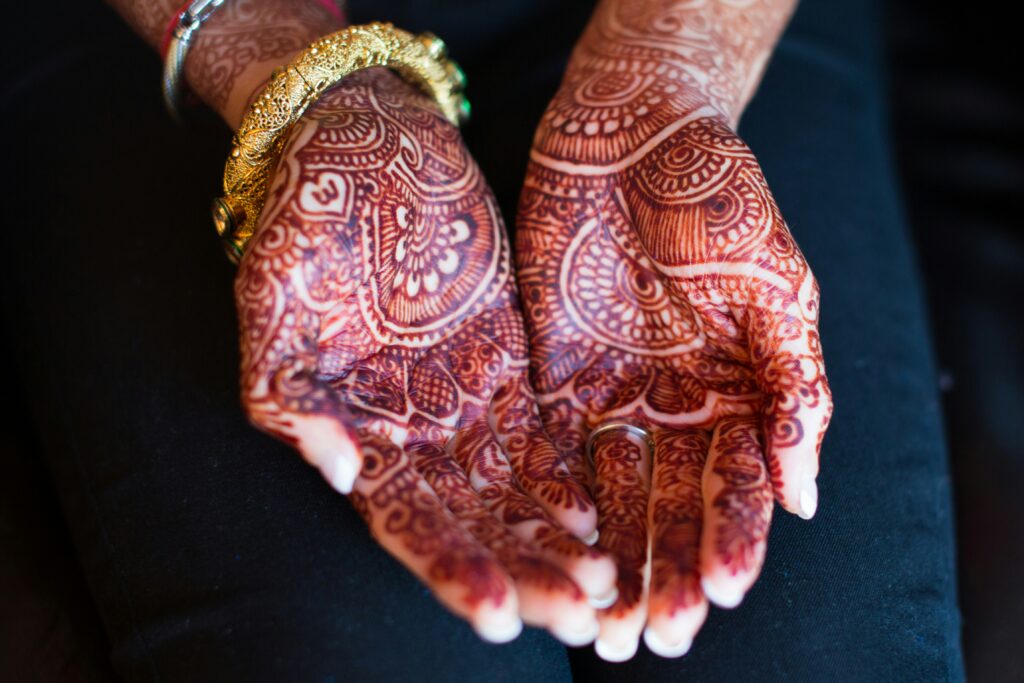
The look: Traditional motifs concentrated on one part of the hand.
A half-hand design offers a middle ground between elaborate bridal mehndi and a completely minimal pattern.
The mehndi can cover the palm or the back of the hand while leaving the remaining area relatively open. This creates a clear visual focus without requiring full coverage.
Possible approaches include:
- A central floral composition on the palm.
- A mandala with light detailing around it.
- A half-moon pattern on the back of the hand.
- A floral arrangement concentrated near the wrist.
- A combination of traditional motifs and minimal finger detailing.
The placement can be adapted depending on whether the bride wants the design to be more visible during the wedding ceremony or in photographs.
8. Personalised Minimal Mehndi
The look: Small details that carry a personal meaning.
Not every bridal mehndi design needs to follow a conventional pattern. Some brides prefer to incorporate small details that reflect their relationship, family or individual story.
These can be introduced without making the design elaborate.
For example:
- The couple’s initials placed within a small floral motif.
- A significant wedding date incorporated into the design.
- A tiny symbol representing a shared memory.
- A motif inspired by the place where the couple met.
- A small traditional element that holds family significance.
Personalised mehndi works best when the reference is subtle and thoughtfully placed.
At DreamzKrraft, personalisation is an important part of wedding design. The same approach can extend to smaller details such as mehndi, stationery, guest experiences and ceremonial elements. These touches may be understated, but they can make the celebration feel more connected to the couple.
9. Minimal Feet Mehndi
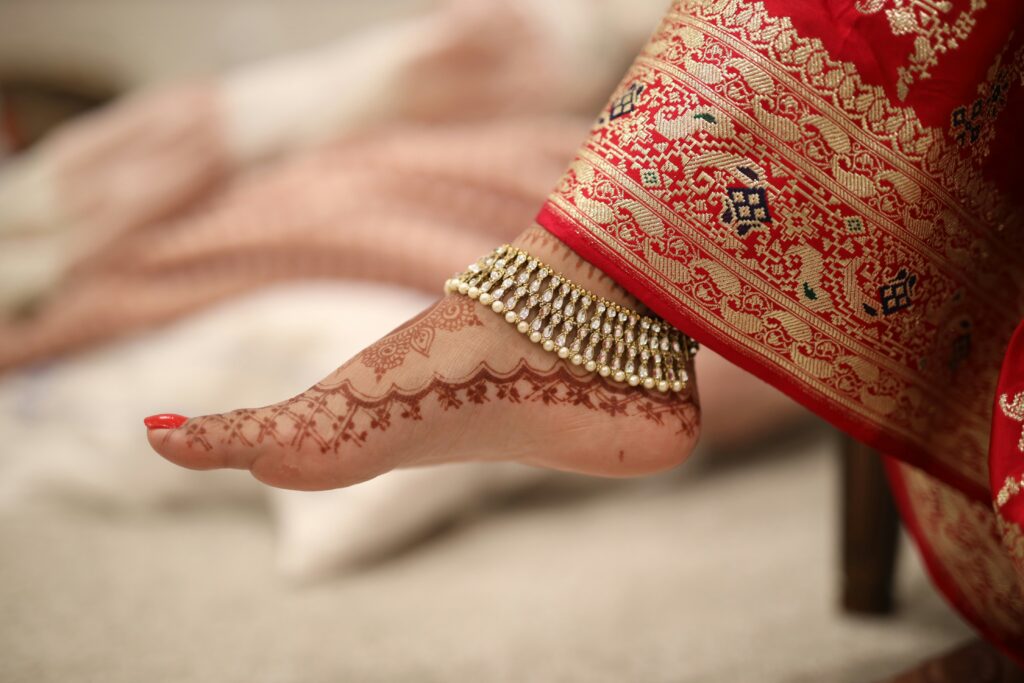
The look: Subtle patterns that complement the bridal footwear and anklets.
Bridal mehndi is not limited to the hands. For brides who prefer understated detailing, the feet can also feature delicate patterns that complement the overall look.
Instead of dense coverage, the design can focus on selected areas.
Consider:
- Small floral motifs around the toes.
- Delicate anklet-inspired patterns.
- A central mandala on the top of the foot.
- Fine trails extending towards the ankle.
- Minimal detailing along the sides of the feet.
The design should be considered alongside the bridal footwear. If the bride is wearing statement anklets or embellished footwear, a more restrained mehndi pattern can allow these elements to stand out.
10. The Contemporary Geometric Design
The look: Clean lines, symmetry and modern patterns.
For brides who prefer a more contemporary aesthetic, geometric mehndi offers an alternative to traditional floral compositions.
The designs can incorporate fine lines, symmetrical shapes, dots, small diamonds and repetitive patterns.
A minimal interpretation might include:
- Fine geometric bands across selected fingers.
- Small diamond or triangular motifs.
- Symmetrical patterns on the back of the hand.
- Minimal linework around the wrist.
- A combination of geometric and botanical details.
The key is maintaining balance. Too many patterns can make the design feel busy, so selecting a few defining elements is often more effective.
This style works particularly well with contemporary bridal outfits, structured silhouettes and modern jewellery.
How to Choose the Right Simple Bridal Mehndi Design
With several styles to choose from, the right design depends on the bride’s personal aesthetic, outfit and the kind of finish she wants.
Before finalising the design, consider the following:
1. Your bridal outfit
The colour, embroidery and overall style of your outfit can influence the mehndi design. A heavily embellished lehenga may work beautifully with understated mehndi, while a simpler outfit can accommodate slightly more detailed patterns.
2. Your jewellery
Consider the placement of rings, bangles, haathphool and other hand accessories. The mehndi should complement the jewellery rather than compete with it.
3. The placement of the design
Decide whether you prefer detailing on the palm, back of the hand, fingers, wrist or feet. A strategically placed design can create a more refined look than one that covers every available area.
4. Your personal preference
Some brides prefer floral patterns, while others are drawn to geometric motifs, Arabic-inspired trails or personalised designs. Choose a style that feels natural to you rather than following a trend simply because it is popular.
5. The mehndi artist’s style
Different artists have different strengths, from fine-line detailing to bold floral patterns. Review their previous work and discuss the desired level of intricacy before the appointment.
Making Your Mehndi Ceremony Feel Special
For many brides, the mehndi ceremony is one of the more relaxed occasions in the wedding celebrations. It brings together friends and family in an atmosphere that is often informal, colourful and filled with music.
The setting can be designed to reflect that character without becoming overly elaborate.
At DreamzKrraft, the mehndi celebration can be approached as an extension of the wedding’s larger creative direction, with attention to the following:
- A considered colour palette: Fresh greens, yellows, soft pinks and complementary floral tones can establish the mood.
- Comfortable seating: Thoughtfully arranged seating allows the bride and guests to enjoy the ceremony comfortably.
- Floral styling: Seasonal flowers and foliage can create a relaxed yet refined setting.
- Personalised details: Small elements inspired by the couple can make the occasion feel more individual.
- Guest experience: Music, refreshments and activity areas can encourage guests to participate naturally.
The objective is to create a setting that feels welcoming and personal while allowing the mehndi ritual to remain the centre of the celebration.
Creating a Wedding That Reflects Your Personal Style With DreamzKrraft
A wedding is made up of many individual details, and not all of them need to make a statement to leave an impression.
From the bridal outfit and jewellery to the mehndi design and ceremony décor, each choice contributes to the overall aesthetic. For brides who believe less is more, the beauty often lies in selecting details that feel considered rather than excessive.
At DreamzKrraft, we approach wedding celebrations through a combination of creative direction, design and production. Every element is considered in relation to the couple’s preferences and the experience they want to create.
Whether the celebration is traditional, contemporary or a blend of both, our approach is to bring the different details together into a cohesive experience.
Because understated does not mean ordinary. Sometimes, the most memorable details are the ones that know exactly when to stop.
Frequently Asked Questions
1. What is a bridal simple mehndi design?
A bridal simple mehndi design uses fewer motifs, finer detailing and more open space than elaborate full-hand patterns. It may feature floral elements, mandalas, geometric patterns, finger detailing or delicate trails across the wrist and hands.
2. Which simple mehndi designs are suitable for modern brides?
Modern brides often prefer minimal floral designs, Arabic-inspired trails, jewellery-style patterns, geometric motifs and personalised mehndi. The choice depends on the bridal outfit, jewellery and individual preferences.
3. Can simple bridal mehndi still look traditional?
Yes. Traditional motifs such as mandalas, paisleys, florals and cultural symbols can be incorporated into a simpler composition. The design can retain its traditional character without requiring dense coverage across the hands and feet.
4. Is Arabic mehndi suitable for a bridal look?
Arabic-inspired mehndi can work beautifully for brides who prefer flowing floral patterns with more open space. A bridal interpretation can include larger motifs, delicate shading and carefully placed detailing to create a balanced look.
5. How can I make my bridal mehndi more personal?
You can incorporate initials, a wedding date, meaningful symbols or small references to your relationship. These details can be integrated into floral or geometric patterns without changing the overall simplicity of the design.
6. Should bridal mehndi match the wedding outfit?
It does not need to match exactly, but the design should complement the outfit and jewellery. Consider the colours, embroidery, silhouette and overall aesthetic when selecting the pattern.
7. How long before the wedding should bridal mehndi be applied?
Many brides schedule their mehndi ceremony one or two days before the wedding, allowing time for the colour to develop. The ideal timing depends on the artist’s recommendations, the henna used and the wedding schedule. Brides should also discuss any skin sensitivities or previous reactions with their mehndi artist beforehand.
8. How can DreamzKrraft help design a cohesive mehndi celebration?
DreamzKrraft approaches the mehndi celebration as part of the larger wedding experience. From the colour palette and floral styling to seating, guest arrangements and personalised details, the creative direction is developed to complement the couple’s preferences and the overall wedding aesthetic.