
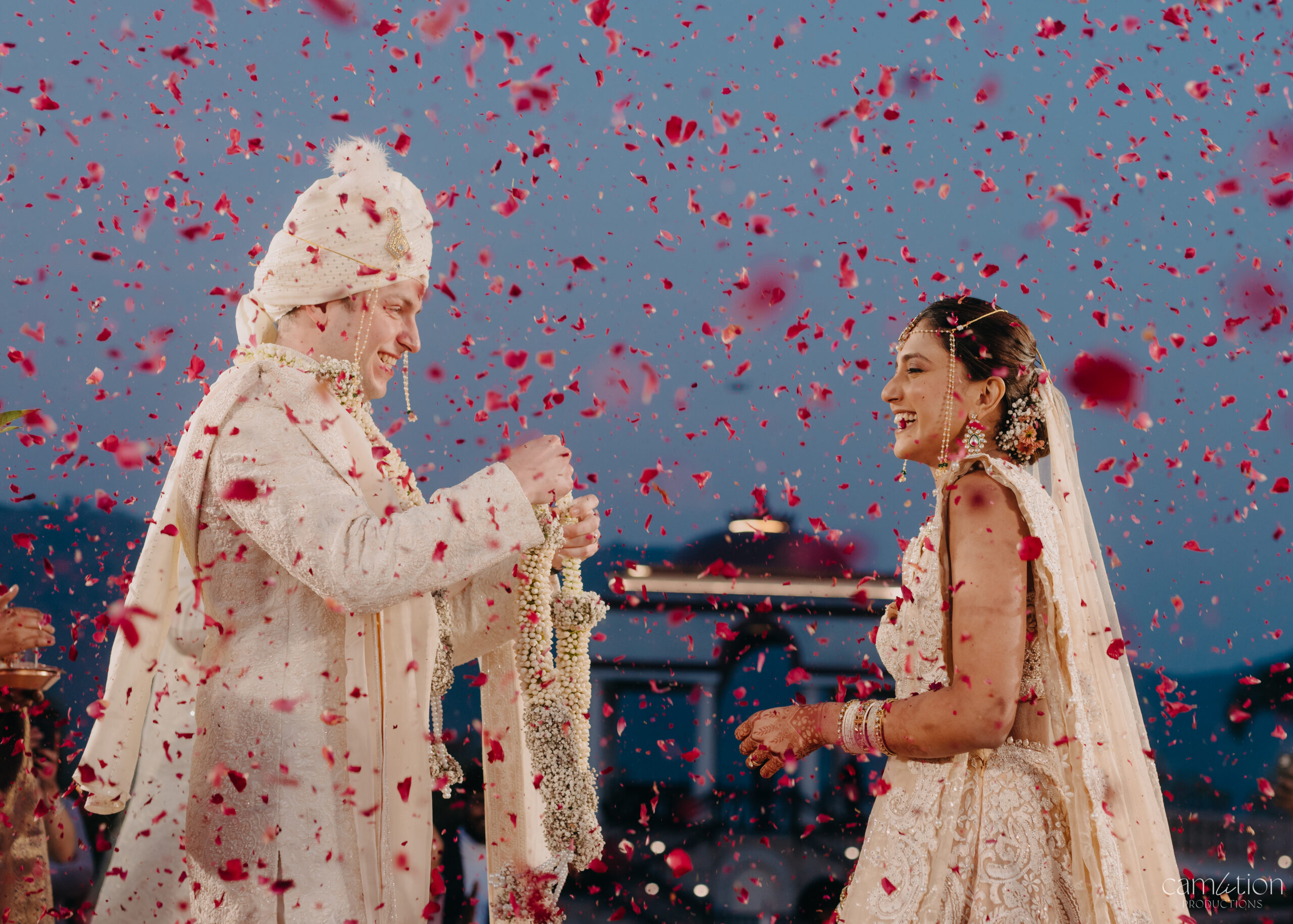
An Indian wedding is a celebration of more than two people coming together. It brings families, generations, customs and beliefs into one shared experience. Every ritual, from the application of haldi to the exchange of jaimalas and the seven steps of saptapadi, carries a meaning that extends beyond the ceremony itself.
Some rituals are joyful and playful. Others are deeply symbolic, marking the transition into a new phase of life. Together, they create a sequence of moments that connect the couple to their families, their cultural heritage and the commitments they are making to one another.
Yet, as weddings evolve, it is worth looking beyond the ceremony to understand why these traditions exist in the first place.
At DreamzKrraft, we see traditional wedding rituals as an important part of the celebration’s identity. Their significance lies not only in how they are performed, but in the stories, relationships and emotions they represent. When thoughtfully planned, these moments can retain their cultural meaning while becoming an integral part of a wedding that reflects the couple.
Here is a closer look at the stories behind some of India’s most recognised wedding rituals.
1. Haldi: A Ritual of Blessings, Purification and Celebration
The haldi ceremony is often one of the most joyful events in the wedding calendar. Family members gather around the bride or groom, applying a paste traditionally made with turmeric and other ingredients, while music, laughter and affectionate teasing fill the space.
But the ritual has a deeper cultural significance.
Turmeric has long held an important place in Indian households and traditional ceremonies. Its association with auspiciousness, purification and well-being has made it a meaningful part of pre-wedding customs in many communities.
The haldi ceremony symbolically prepares the bride and groom for the transition into married life. It is also an occasion for family members to offer their blessings before the wedding ceremony.
Why do we apply haldi before a wedding?
Traditionally, haldi is associated with:
- Auspicious beginnings: Turmeric holds cultural and ceremonial significance in many Indian traditions.
- Blessings from loved ones: The ritual brings family members together to wish the couple well.
- Preparation for the wedding: It marks an important stage in the celebrations leading up to the marriage ceremony.
- A shared family experience: The gathering creates an opportunity for relatives to participate in a personal and joyful pre-wedding ritual.
The exact customs vary across regions and communities. Some families follow specific sequences, use particular ingredients or incorporate songs and blessings passed down through generations.
How the haldi ceremony has evolved
The haldi ceremony has increasingly become an occasion for creative expression. From intimate gatherings at home to elaborate celebrations at destination resorts, couples are finding different ways to interpret the ritual.
A contemporary haldi might feature a palette of marigold yellow, ivory and fresh green, while another could draw inspiration from regional textiles, traditional floral arrangements or the family’s own customs.
At DreamzKrraft, the opportunity lies in creating a setting that complements the spirit of the occasion without overwhelming it.
This may involve:
- A carefully composed floral backdrop that allows the ritual to remain the focal point.
- Comfortable seating arrangements that bring family members closer to the ceremony.
- A colour palette inspired by traditional flowers, textiles or the couple’s preferences.
- Thoughtful arrangements for photography, movement and guest participation.
- Personalised details that reflect the family’s traditions.
The haldi is naturally a lively occasion. Its design should support that energy while allowing the ritual itself to remain at the heart of the celebration.
2. Mehendi: The Art of Celebration and Auspicious Beginnings
Although the mehendi ceremony is not always considered a formal marriage ritual, it holds an important place in many Indian wedding traditions.
Henna is applied to the bride’s hands and feet, often through intricate designs that may incorporate flowers, paisleys, geometric patterns or personal motifs. In some families, the groom also participates in the ceremony.
Mehendi is associated with beauty, celebration and auspicious beginnings. The gathering also offers an opportunity for family and friends to spend time together before the more formal wedding events begin.
In some communities, the designs incorporate the couple’s initials or other personal references. The tradition of searching for the groom’s initials within the bride’s mehendi is a familiar part of many contemporary celebrations, although customs vary.
What is the significance of mehendi?
The ceremony brings together several layers of meaning:
- Celebration: It marks an important stage in the lead-up to the wedding.
- Beauty and adornment: The intricate designs form part of the bride’s ceremonial preparation.
- Family and community: The gathering creates space for relatives and friends to participate.
- Personal expression: Designs can reflect regional traditions, family preferences and the couple’s story.
The mehendi ceremony also offers an opportunity to introduce a different atmosphere within a multi-day wedding.
At DreamzKrraft, its design can be approached with a lighter, more relaxed visual language than the wedding ceremony or reception. Floral installations, patterned textiles, comfortable seating and carefully considered activity areas can create an environment where guests can interact naturally.
The result is a celebration that feels distinct while remaining connected to the larger wedding.
3. Jaimala: The Exchange That Marks Mutual Acceptance
The jaimala, also known as varmala in many communities, is one of the most recognisable moments of an Indian wedding.
The bride and groom exchange flower garlands, often amid music, applause and celebration. Depending on the family’s traditions, the exchange may take place on a stage, beneath a mandap or within a specially designed ceremonial setting.
The gesture is commonly understood as a symbol of mutual acceptance. The couple welcomes one another as partners, marking an important moment in the wedding proceedings.
The exchange also carries a strong visual and emotional significance. It is often one of the first major moments when the couple stands together before their gathered families and guests.
Why do the bride and groom exchange garlands?
The significance of jaimala is commonly associated with:
- Mutual acceptance: The exchange symbolises the couple accepting one another as partners.
- The beginning of the union: It marks an important moment in the progression of the wedding ceremony.
- Public celebration: Families and guests witness and celebrate the couple’s union.
- Floral symbolism: Flowers contribute to the ceremonial significance of the exchange and are often selected to complement the occasion.
The exact sequence and interpretation of the ritual can vary according to regional customs and family traditions.
Designing the jaimala moment
From a design perspective, the jaimala is a moment that deserves careful consideration.
The couple needs to remain the focal point, while the setting should provide an appropriate visual frame. The scale of the stage, the floral arrangements, the lighting and the positioning of guests all influence how the moment is experienced.
At DreamzKrraft, the design of this setting would consider:
- The ceremonial backdrop: Creating a setting that complements the couple without distracting from them.
- Floral proportions: Ensuring the garlands and surrounding arrangements work harmoniously with the scale of the stage.
- Guest sightlines: Allowing guests to witness the exchange comfortably.
- Lighting and photography: Ensuring the couple remains clearly visible throughout the moment.
- The transition into the next event: Coordinating the ceremony’s progression so the exchange feels natural within the larger programme.
The objective is not to make the ritual more elaborate than it needs to be. It is to give an important moment the setting and attention it deserves.
4. Kanyadaan: A Family’s Blessing for a New Chapter
Kanyadaan is a traditional ritual observed in many Hindu wedding ceremonies, although its practice and interpretation vary considerably across communities and families.
In traditions where it is performed, the ritual involves the bride’s parents or guardians participating in the formal wedding proceedings and offering their blessings as she enters married life.
The word is traditionally interpreted through the concepts of kanya, meaning daughter or young woman, and daan, meaning giving. However, contemporary families may understand and approach the ritual differently, particularly as views around marriage, equality and family roles continue to evolve.
For many families, the emotional significance lies in the participation of parents or guardians and the recognition of a new chapter in the couple’s lives.
What does kanyadaan represent?
Depending on the family’s beliefs and interpretation, the ritual may express:
- Family blessings: Parents or guardians formally participate in the couple’s transition into married life.
- Continuity between generations: The ritual connects the wedding to customs observed by earlier generations.
- Family participation: It recognises the role of loved ones in supporting the couple.
- A significant transition: It marks an emotionally important point within the ceremony.
Not every family performs kanyadaan, and some choose to reinterpret or adapt the ritual according to their beliefs.
For wedding planners, understanding these preferences is essential. At DreamzKrraft, the ceremony’s sequence and design should reflect the couple’s wishes and the customs they want to preserve, with space for family traditions and individual perspectives.
5. The Mandap: A Sacred Space at the Centre of the Ceremony
The mandap is the ceremonial structure beneath which many Hindu wedding rituals take place.
Traditionally, it is a defined space where the couple participates in important rites with the guidance of the officiating priest. Its form and decoration can vary significantly across regions, communities and family traditions.
Depending on the ceremony, the mandap may incorporate pillars, flowers, fabric, sacred objects and other elements with cultural or religious significance.
Its importance is not simply architectural. The mandap establishes the focal point of the wedding ceremony and provides the setting for the rituals that follow.
What makes the mandap significant?
- A designated ceremonial space: It establishes the setting for the marriage rituals.
- A place for family participation: Depending on the customs followed, family members may join the couple during particular rites.
- A connection to tradition: Its design and ceremonial use reflect the family’s religious and cultural practices.
- A visual centrepiece: It becomes the primary focus of the wedding ceremony.
How mandap design can reflect tradition and personal style
The mandap is often one of the most carefully considered design elements of an Indian wedding.
Some couples prefer a traditional structure with flowers and fabric, while others favour a contemporary interpretation using architectural forms, natural materials or restrained floral arrangements.
At DreamzKrraft, the design process should begin with the ceremony itself.
The officiant’s requirements, the rituals being performed, the number of participants and the venue’s physical constraints all need to be understood before the final design is developed.
This includes considering the height and proportions of the structure, access for family members, the positioning of ceremonial elements and the comfort of the couple throughout the proceedings.
A thoughtfully designed mandap brings the setting and the ceremony together without allowing the décor to overshadow the rituals it is meant to accommodate.
6. Agni: The Sacred Fire as a Witness to Marriage
In many Hindu wedding traditions, agni, or sacred fire, holds an important place in the marriage ceremony.
The fire is associated with purification and sacred witness, and it forms part of several rituals performed during the wedding. Depending on the tradition, the couple may make offerings into the fire while the officiating priest recites mantras.
Agni is particularly significant in ceremonies that include the saptapadi, the ritual of seven steps or vows.
The use of sacred fire and the precise sequence of related rituals vary according to religious tradition, regional practice and the officiant’s guidance.
Why is agni important in a Hindu wedding?
Its ceremonial significance is commonly associated with:
- Sacred witness: The fire forms part of the solemnisation rituals in many Hindu wedding traditions.
- Purification: Fire carries symbolic associations with purification and transformation.
- Commitment: The rituals performed around the fire contribute to the ceremonial expression of the couple’s union.
- Continuity of tradition: The practice connects the wedding to longstanding religious customs.
Planning the sacred fire ceremony
The presence of sacred fire introduces practical considerations that need to be addressed without compromising the ritual’s significance.
The ceremony requires suitable space, appropriate fire-safety arrangements and coordination with the venue and officiating priest. Ventilation, the positioning of the couple and family members, and the proximity of floral arrangements or fabrics should also be considered.
At DreamzKrraft, these requirements would be incorporated into the mandap design and ceremony plan from the beginning. The setting needs to accommodate the ritual appropriately while ensuring that the couple, officiant and guests can participate comfortably.
7. Saptapadi: Seven Steps Towards a Shared Life
Saptapadi is among the most significant rituals in many Hindu wedding traditions.
The word combines sapta, meaning seven, and padi, referring to steps. During the ritual, the couple takes seven steps together, accompanied by vows, prayers or blessings according to the tradition being followed.
The seven steps are commonly associated with the couple’s shared responsibilities and aspirations for married life. Interpretations vary, but they often include themes such as nourishment, strength, prosperity, well-being, family, mutual support and companionship.
Unlike the more celebratory atmosphere of the jaimala, saptapadi represents a quieter but deeply significant part of the ceremony.
What do the seven steps represent?
The exact wording of the vows differs across traditions, but the seven steps are commonly interpreted through themes such as:
- Nourishment and sustenance: A commitment to supporting the needs of their shared life.
- Strength and well-being: A wish for health, resilience and the ability to face challenges together.
- Prosperity: An intention to build stability and manage life’s responsibilities as partners.
- Mutual happiness: A commitment to contribute to one another’s happiness and well-being.
- Family and care: A shared responsibility towards family and, where relevant, raising children.
- Health and harmony: A wish for a life marked by balance, care and companionship.
- Friendship and lifelong partnership: A commitment to stand beside one another through the years ahead.
These descriptions are broad interpretations rather than a universal translation. The specific vows and their order should be confirmed with the officiating priest according to the couple’s tradition.
Why saptapadi remains significant today
The ritual offers a moment to reflect on marriage as an ongoing partnership rather than a single ceremonial event.
Its meaning extends beyond the wedding day to the shared responsibilities, decisions and experiences that follow.
From a planning perspective, saptapadi requires the ceremony to be organised around the ritual rather than the other way around. The officiant’s requirements, the placement of the sacred fire, the space available for the steps and the participation of family members all need to be considered.
At DreamzKrraft, these practical elements would inform the ceremony layout, ensuring that the ritual can proceed comfortably and that its significance remains at the centre of the experience.
8. Sindoor and Mangalsutra: Symbols of Married Life
In many Hindu wedding traditions, sindoor and mangalsutra form important parts of the marriage ceremony.
Sindoor, traditionally a red or vermilion powder, is applied by the groom to the bride’s hair parting in communities that observe this custom. The mangalsutra is a necklace tied or presented during the ceremony, depending on the regional tradition.
Both are widely recognised symbols associated with marriage, although their significance, design and use differ across communities.
What do sindoor and mangalsutra signify?
Their meanings may include:
- Marital identity: They are recognised as symbols of marriage in many communities.
- Cultural continuity: Their use connects the ceremony to regional and family customs.
- Personal significance: The design of the mangalsutra, in particular, may reflect regional traditions and family preferences.
- A ceremonial transition: The rituals mark an important point in the wedding proceedings.
Not every Hindu community follows the same customs, and some couples adapt or omit particular rituals according to their beliefs.
These moments may be brief, but they carry considerable emotional significance for families who observe them.
At DreamzKrraft, the ceremony schedule should allow these rituals to take place without unnecessary interruption. Thoughtful sequencing, clear communication with the officiant and careful coordination of photography help preserve the intimacy of the moment.
9. Vidaai: A Moment of Transition and New Beginnings
Vidaai is a farewell ritual observed in many Indian wedding traditions, particularly in communities where the bride traditionally leaves her parental home following the wedding.
The ceremony can be deeply emotional, bringing together feelings of gratitude, nostalgia, celebration and anticipation. It marks a transition in family life and the beginning of a new chapter for the couple.
The ritual’s form varies considerably. Some families follow traditional customs involving blessings, symbolic gestures or particular songs, while others approach the farewell in a more contemporary way.
Why is vidaai emotionally significant?
The moment can represent:
- A transition: The beginning of a new phase in the couple’s lives.
- Family bonds: Recognition of the relationships and memories that have shaped the bride’s life.
- Blessings for the future: The family’s wishes for the couple’s well-being.
- Continuity and change: Acknowledgement that marriage brings new relationships while existing bonds remain important.
For a wedding planner, the emotional nature of vidaai calls for sensitivity rather than elaborate production.
At DreamzKrraft, the schedule, music, photography and movement of guests should be coordinated with care. The focus remains on the family and the significance of the moment, allowing the farewell to unfold naturally.
Bringing Traditional Wedding Rituals Into a Contemporary Celebration
Indian weddings continue to evolve, with couples finding ways to honour family customs while expressing their own preferences.
Some choose to preserve every ritual in its traditional form. Others adapt the sequence, incorporate regional practices from both families or include contemporary elements that reflect their relationship.
There is no single approach that works for every couple. What matters is understanding the meaning of the rituals being performed and ensuring that the celebration reflects the family’s beliefs and the couple’s wishes.
At DreamzKrraft, the planning process begins with conversations about the ceremony itself.
Before developing the décor or finalising the event schedule, it is important to establish:
- Which rituals will be performed: Confirm the ceremony sequence with the couple and officiating priest.
- What each ritual requires: Understand the space, materials, participants and timing involved.
- Which family customs matter most: Allow the couple and their families to identify the traditions they want to preserve.
- How the venue will support the ceremony: Ensure that the layout accommodates the rituals and the people participating in them.
- How the design can complement the ceremony: Develop the décor around the ceremonial requirements rather than allowing it to dictate them.
- How the experience will unfold: Coordinate the schedule, transitions and guest arrangements so that the rituals receive the attention they deserve.
This approach allows the cultural and emotional significance of the wedding to remain central, while the overall celebration reflects the couple’s individual style.
Planning a Traditional Wedding With DreamzKrraft
A traditional wedding brings together many layers of meaning. Each ritual has its own place within the ceremony, shaped by religious beliefs, regional customs and family traditions.
Understanding these rituals allows couples to approach their wedding with greater intention. It also helps ensure that the ceremony is planned around what matters most, rather than treating the rituals as elements to fit into a predetermined schedule.
At DreamzKrraft, we bring together wedding planning, design and production to create celebrations that respect tradition while reflecting the couple’s vision.
From the mandap and ceremony layout to the sequencing of rituals and coordination of family participation, every detail is considered in relation to the experience as a whole.
The objective is not to change the meaning of tradition, but to create the right setting for it.
Because the most meaningful weddings are not defined only by how they look. They are shaped by the people, promises and traditions that bring everyone together.
Frequently Asked Questions
1. What are the most important rituals in a traditional Hindu wedding?
The rituals vary according to region, community and family tradition. Common ceremonies may include haldi, mehendi, jaimala, kanyadaan, the sacred fire ceremony, saptapadi, sindoor and mangalsutra. Not every family follows the same sequence or includes every ritual.
2. Why is haldi performed before an Indian wedding?
Haldi is traditionally associated with auspiciousness, purification and well-being. The ceremony also gives family members an opportunity to gather and offer their blessings before the wedding. The specific customs and ingredients vary across communities.
3. What is the significance of jaimala in a wedding?
Jaimala, also known as varmala in many communities, involves the exchange of flower garlands between the bride and groom. It is commonly understood as a symbol of mutual acceptance and marks an important moment in the wedding proceedings.
4. What is saptapadi, and what do the seven steps mean?
Saptapadi is a ritual in many Hindu wedding traditions in which the couple takes seven steps together, accompanied by vows or prayers. The steps are commonly associated with themes such as nourishment, strength, prosperity, well-being, family and lifelong companionship. The exact wording and interpretation vary according to the tradition followed.
5. Why is the mandap important in a traditional wedding?
The mandap is the ceremonial structure beneath which many Hindu wedding rituals take place. It establishes the focal point of the ceremony and provides the setting for important rites. Its design should accommodate the officiant, the couple, participating family members and the requirements of the rituals.
6. Do all Indian weddings follow the same rituals?
No. Indian wedding customs vary across religious communities, regions, languages and family traditions. Even within the same community, couples may follow different sequences or choose to adapt particular rituals according to their beliefs and preferences.
7. How can couples incorporate traditional rituals into a contemporary wedding?
Couples can begin by identifying the rituals that are most meaningful to them and their families. The ceremony layout, décor, schedule and guest experience can then be developed around those requirements. This allows the wedding to reflect contemporary design preferences while respecting the traditions being observed.
8. How does DreamzKrraft plan weddings that include traditional rituals?
DreamzKrraft works with couples to understand their ceremony requirements, family customs and creative preferences. These inform the event schedule, mandap design, venue layout and production planning, ensuring that the rituals can be performed comfortably and remain central to the celebration.