Quick Answer
An immersive wedding is one you step inside rather than simply look at. It surrounds, it tells a story, and it engages every sense — and that effect is the result of specific, deliberate design choices.
Key Takeaways
- Immersion comes from six design elements working together.
- A narrative through-line ties every function into one story.
- Sound, light and scent matter as much as what guests see.
- Samya & Shivam’s wedding shows immersive design in practice.
A world, not a backdrop
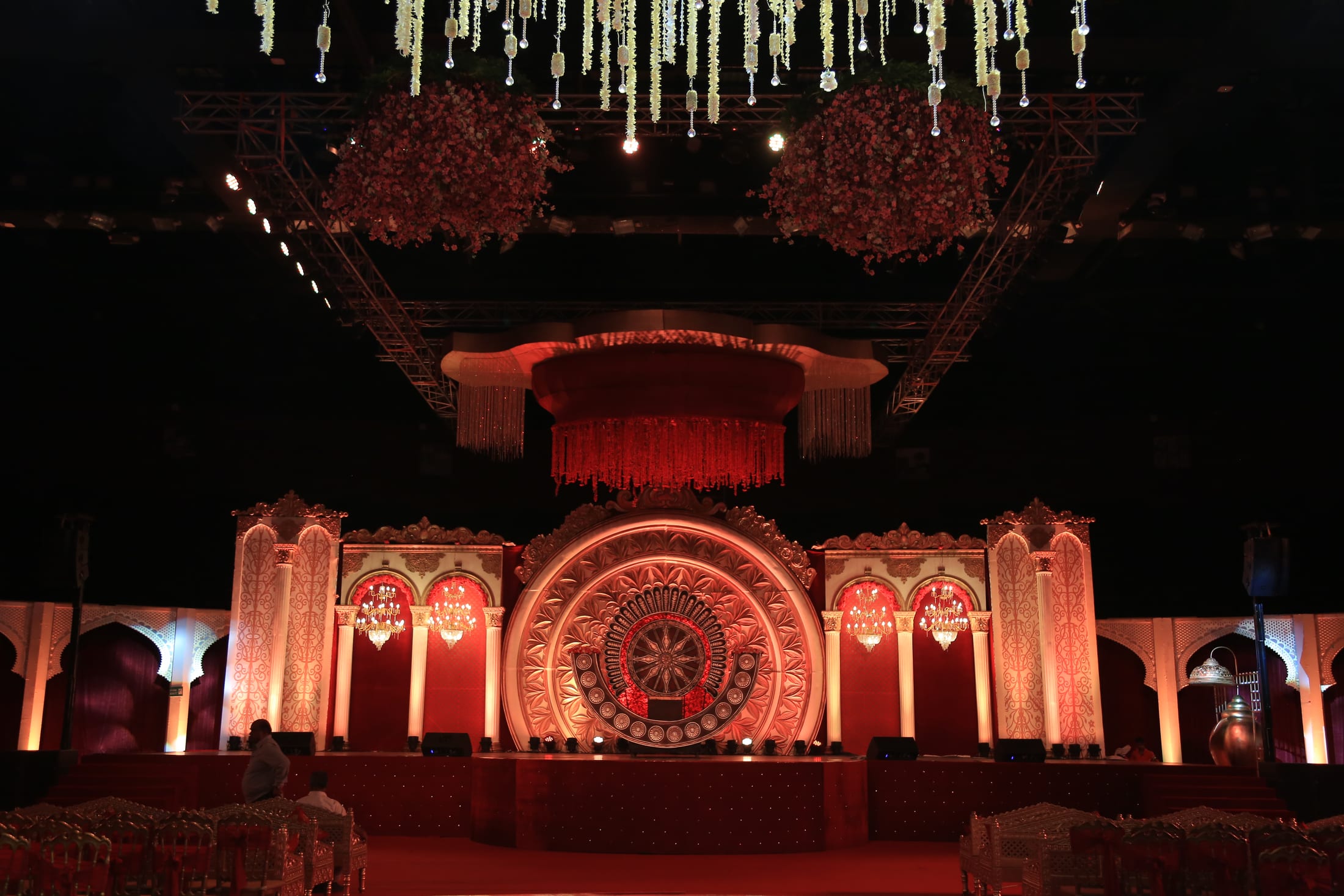
The first principle of immersion is spatial storytelling — building an environment guests inhabit, not a stage they observe. At DreamzKrraft, this comes directly from production design: a set is convincing only when you can walk into it and forget it was built.
The six elements of immersive design
In practice, immersion is engineered from six elements working in concert:
- Spatial storytelling — an environment that surrounds rather than faces the guest.
- Multi-sensory atmosphere — scent, texture and temperature, not only visuals.
- A narrative through-line — one idea connecting every function.
- Guest journey design — a considered path from arrival to farewell.
- Lighting as emotion — light that shapes mood, not just visibility.
- Sound design — music and ambience that move the evening forward.
Immersion in practice
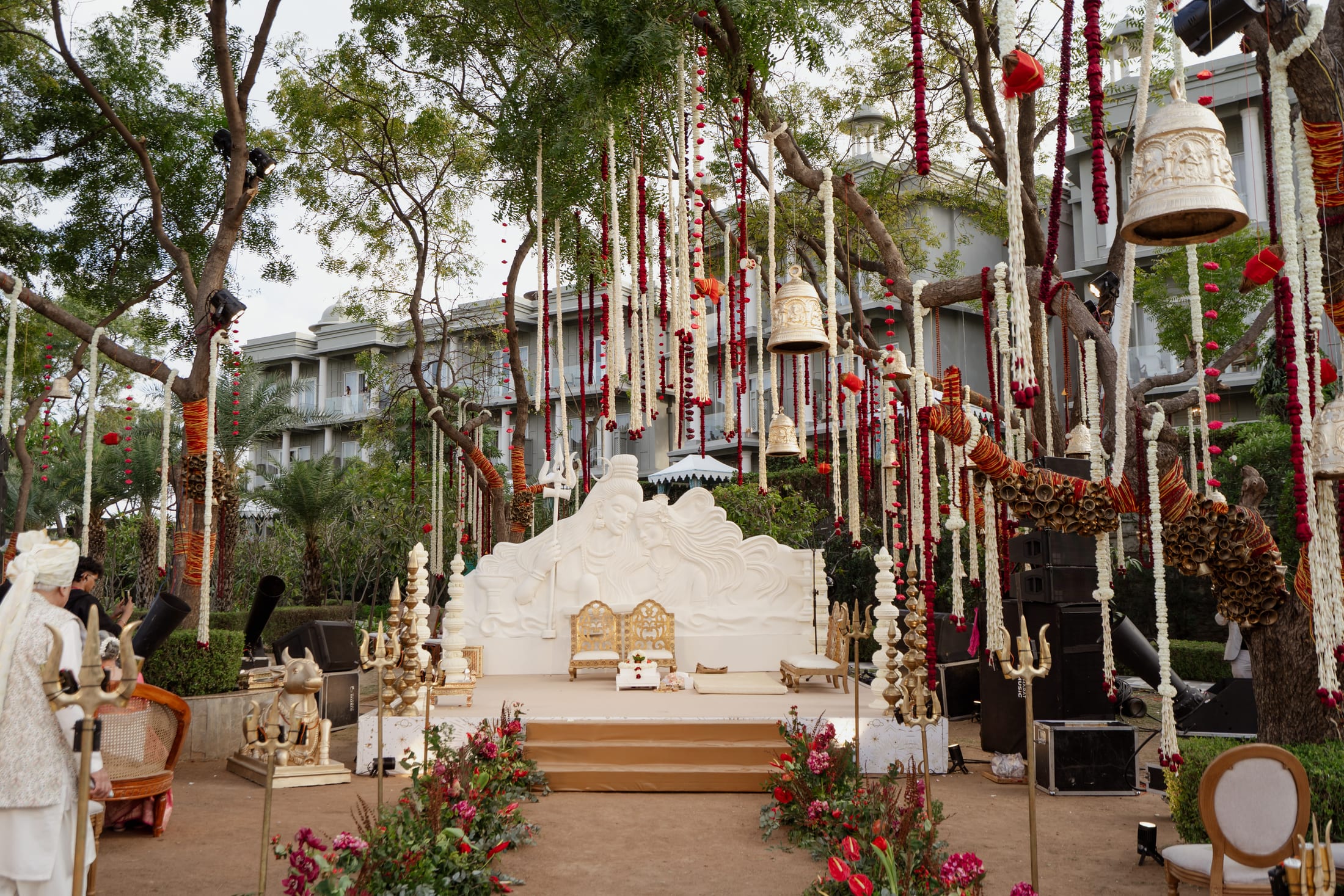
The Samya & Shivam celebration at Raffles Udaipur is a clear example: edgy contemporary art installations, a dramatic Ganesh, and a tribute to Shiva and Parvati woven through the décor — daring and devotional in the same world, designed to make guests feel rather than merely admire.
A decorated wedding is something guests look at. An immersive one is somewhere they have been.
Why immersion beats decoration
Decoration impresses for a moment; immersion is remembered for years, because it is felt rather than seen. It is the difference our design and production team is built to deliver — and the reason “luxury is in the feeling, not the spectacle.” To design an immersive celebration, contact our team.