
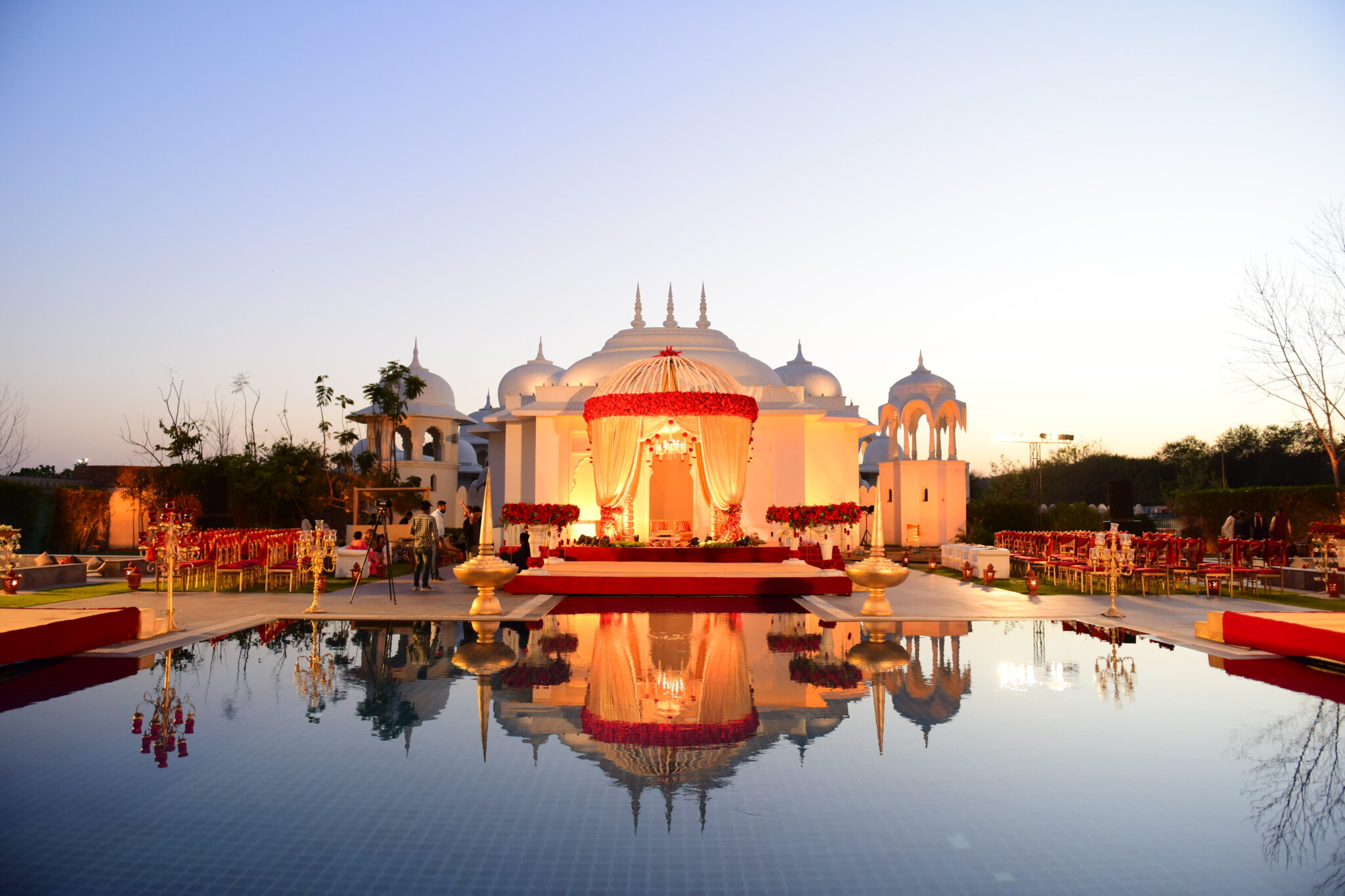
There is something distinctive about celebrating a wedding outdoors. An open coastline, a landscaped garden, a private estate or a palace courtyard offers a setting that feels connected to its surroundings. Natural light becomes part of the design, the landscape provides its own visual character, and the transition from day to evening creates opportunities to shape the celebration in entirely different ways.
But choosing the right outdoor wedding venue involves more than finding a beautiful location.
The setting needs to accommodate the scale of the celebration, support the creative vision and offer the infrastructure required for a seamless guest experience. The weather, lighting, sound, movement between spaces and technical production all influence how the wedding ultimately comes together.
At DreamzKrraft, we approach outdoor wedding venues as opportunities to create immersive environments that feel connected to their surroundings while reflecting the couple’s individual vision. With the right balance of design, planning and production, an outdoor setting can become much more than a backdrop. It can shape the entire experience of the wedding.
Why Outdoor Wedding Venues Offer a Different Kind of Experience
An outdoor setting introduces a natural sense of openness that can be difficult to recreate indoors. The landscape, changing light and surrounding architecture become part of the celebration, giving the creative team a different starting point for design.
The possibilities also vary considerably depending on the location.
A beachfront venue offers an expansive horizon and the opportunity to build a celebration around the changing colours of the sky. A garden creates a softer, more intimate atmosphere, with existing greenery contributing to the visual composition. A palace courtyard brings architectural character, while a private estate may offer the flexibility to create multiple experiences within one setting.
For DreamzKrraft, the first step is understanding what makes the location distinctive and how that character can inform the celebration.
The most effective outdoor wedding designs do not compete with their surroundings. They work with them.
Choosing an Outdoor Wedding Venue That Fits Your Vision
The right venue should do more than accommodate the guest list. It should support the kind of celebration the couple wants to create.
Before finalising a location, it is worth considering the following:
- The natural setting: Is the landscape, architecture or view an integral part of the experience you want to create?
- The scale of the celebration: Can the venue comfortably accommodate the guest count, ceremony seating, dining arrangements and entertainment?
- The available spaces: Can different functions take place in distinct areas without making guest movement difficult?
- The venue infrastructure: Are power supply, service access, catering facilities, restrooms and technical requirements adequately addressed?
- The privacy and accessibility: Can guests reach the venue comfortably, and does the setting offer the level of privacy the celebration requires?
- The creative possibilities: Can the space accommodate bespoke installations, floral design, lighting and staging without compromising its natural character?
At DreamzKrraft, these considerations inform the creative process from the beginning. A venue may look exceptional during a site visit, but its suitability depends on how well it supports the complete wedding experience.
Understanding that distinction early helps ensure that the final design is both ambitious and achievable.
From Coastal Escapes to Garden Celebrations: Exploring Outdoor Wedding Settings
Not all outdoor wedding venues offer the same possibilities. The landscape, architecture and available infrastructure influence everything from the décor palette to the event schedule.
Beachfront Wedding Venues
A beachfront setting offers a natural sense of scale, with the sea and horizon becoming part of the visual composition.
The most compelling designs often allow the landscape to lead. Instead of introducing excessive décor, the creative direction can focus on carefully positioned floral arrangements, elegant seating, refined materials and installations that complement the surroundings.
The timing of the ceremony is equally important. A sunset celebration, for instance, requires the ceremony schedule, photography, guest arrival and lighting transition to be planned around the changing natural light.
Beachfront venues also introduce specific production considerations. Wind, sand, humidity and changing weather conditions can affect floral arrangements, lightweight structures, furniture and technical equipment.
At DreamzKrraft, these factors would form part of the venue assessment and production plan, ensuring that the design responds to the environment rather than working against it.
Garden Wedding Venues
Gardens offer a naturally layered setting, where mature trees, foliage, lawns and flowering plants can contribute to the overall design.
This makes them particularly suited to celebrations that call for an elegant, intimate or romantic atmosphere.
The design approach should begin by studying the existing landscape. A ceremony beneath a mature tree may require very little additional structure, while an open lawn might benefit from a bespoke floral installation or a carefully designed ceremonial backdrop.
The layout also deserves attention. Seating needs to provide clear sightlines, pathways should remain accessible, and dining or entertainment areas should be positioned without disrupting the natural flow of the space.
Rather than covering every area with décor, DreamzKrraft’s production-led approach would focus on identifying where design can have the greatest impact.
The result is a setting that feels considered, with the landscape and the celebration working together.
Palace Courtyards and Heritage Estates
For couples drawn to architectural grandeur, palace courtyards and heritage estates offer a setting with an established identity.
Stone façades, arches, colonnades, traditional architectural details and landscaped courtyards can provide a strong visual foundation without requiring an elaborate transformation.
The creative challenge lies in balancing the scale of the celebration with the character of the property.
Large installations may be appropriate in expansive courtyards, while more intimate spaces might benefit from restrained floral arrangements, carefully placed lighting and elegant furniture.
Heritage properties may also have restrictions around fixing décor to walls, installing structures or using certain technical equipment. These requirements need to be understood before the final design is approved.
For DreamzKrraft, the objective would be to develop a creative direction that respects the architecture while introducing elements that make the celebration personal to the couple.
Private Estates and Countryside Venues
Private estates offer a different kind of flexibility. Depending on the property, they may allow couples to create a sequence of experiences across gardens, lawns, terraces and indoor spaces.
This can work particularly well for multi-day weddings, where each function needs its own atmosphere.
A welcome dinner could take place in a garden, followed by a daytime celebration on the lawn and a formal reception in a separate setting. The transition between these spaces can become part of the guest experience.
However, private estates may require additional infrastructure, including temporary kitchens, power distribution, service routes, guest facilities and transport arrangements.
These requirements should be considered alongside the creative concept, not after it has been finalised.
A well-chosen estate can offer considerable creative freedom, provided the planning accounts for what the property can realistically support.
Designing an Outdoor Wedding That Feels Distinctive
An outdoor venue already offers a strong visual foundation. The role of design is to build on that foundation with intention.
At DreamzKrraft, the creative direction would begin with three questions: What makes the location special? What should the celebration feel like? And which design elements will help translate that feeling into a physical experience?
From there, the design can be developed around the setting.
Let the Landscape Inform the Colour Palette
The colours of the surroundings can provide a starting point for the décor.
A coastal location might lend itself to a palette inspired by sand, ivory, soft blue and natural textures. A garden could support layered greens, seasonal florals and warmer tones. A heritage property might call for colours that complement its stonework, architectural details and existing finishes.
The objective is not to match every element to the surroundings. It is to create a visual relationship between the venue and the design.
Create a Focal Point Without Overpowering the Setting
Outdoor spaces often benefit from one or two carefully considered focal points.
This could be a ceremony structure positioned against the landscape, a floral installation framing an architectural feature or a dining arrangement designed around a central feature.
The scale of the installation should be proportionate to the venue. A structure that looks impressive in a design presentation may feel overwhelming when placed against a vast landscape or within a historic courtyard.
This is where spatial planning becomes essential.
DreamzKrraft’s production-led approach considers how the design will be experienced from different viewpoints, including the entrance, seating areas, dining spaces and photography positions.
Design for the Transition From Day to Evening
One of the most distinctive advantages of outdoor wedding venues is the opportunity to create different atmospheres as natural light changes.
A daytime ceremony may feel open and understated, with the landscape providing much of the visual interest. As the sun sets, the introduction of layered lighting can change the character of the same space.
Warm illumination across trees, architectural details and pathways can establish a more intimate atmosphere. Table lighting and carefully positioned decorative elements can bring the dining area into focus, while technical lighting can support entertainment later in the evening.
These transitions need to be planned from the outset.
Lighting positions, power requirements, installation schedules and the timing of each function all influence the final result. When considered early, the change from day to evening becomes an integral part of the design rather than a last-minute addition.
The Production Details That Make Outdoor Weddings Work
An outdoor wedding can look effortless to guests, but the setting often requires more technical coordination than a conventional indoor venue.
There may be no permanent stage, limited power infrastructure, uneven ground or restrictions on when suppliers can access the site. Weather conditions can also affect installation schedules and the materials used.
At DreamzKrraft, these practical requirements would be considered alongside the creative vision.
Key production considerations include:
- Ground conditions: Assessing whether the surface is suitable for staging, seating, flooring and temporary structures.
- Power and technical equipment: Planning adequate power distribution for lighting, sound, entertainment and other production requirements.
- Weather protection: Determining the appropriate contingency arrangements for rain, wind, heat or humidity.
- Sound management: Positioning speakers appropriately and understanding any venue or local restrictions.
- Vendor access: Coordinating delivery routes, installation schedules and service areas.
- Guest circulation: Creating clear pathways between the ceremony, dining areas, restrooms and other event spaces.
- Lighting transitions: Ensuring the venue remains functional and visually cohesive as daylight fades.
- Site restoration: Planning the dismantling of temporary installations and the restoration of the venue after the celebration.
These details are not separate from the design process. They determine which creative ideas can be executed successfully and how comfortably guests can experience them.
Weather Planning: Protecting the Experience Without Compromising the Design
Weather is one of the most important considerations when choosing outdoor wedding venues.
Even in destinations known for favourable conditions, temperature changes, unexpected showers, strong winds and humidity can affect the celebration.
A weather contingency should therefore be developed before the final design is approved.
Depending on the venue, this may involve a covered structure, an indoor alternative, temporary flooring, suitable cooling arrangements or a revised event layout.
The contingency also needs to work aesthetically.
A backup location that cannot accommodate the original guest count or production requirements may require substantial redesign. Similarly, a temporary structure needs to be assessed for safety, installation requirements and suitability for the expected conditions.
At DreamzKrraft, the aim would be to consider the primary plan and its alternatives as part of the same planning exercise.
This allows the team to identify which elements can be adapted, which require additional infrastructure and how the guest experience can remain cohesive if conditions change.
The best contingency plans are not improvised on the day. They are built into the planning process.
Creating a Seamless Experience for Your Guests
A beautiful outdoor setting should also be comfortable and intuitive to navigate.
Guests may be spending several hours outdoors, moving between different areas and attending functions at different times of the day. Small decisions around comfort and accessibility can therefore have a significant impact on their experience.
Depending on the destination and season, the planning may need to account for:
- Shaded seating and hydration during daytime functions.
- Comfortable flooring and clearly defined walking routes.
- Suitable seating for older guests and those with mobility requirements.
- Accessible restroom facilities.
- Transport between accommodation and the venue.
- Clear signage and discreet guest assistance.
- Thoughtfully positioned dining, lounge and refreshment areas.
- Appropriate arrangements for children and other guests who may require additional support.
For destination weddings, hospitality also extends beyond the venue itself. Arrival coordination, accommodation information, transport schedules and communication around the event programme all contribute to how comfortably guests experience the celebration.
DreamzKrraft approaches these elements as part of the wider wedding experience, ensuring that the setting works as well for the people attending as it does visually.
Planning an Outdoor Wedding Across Multiple Functions
When a wedding spans several days, an outdoor venue can offer opportunities to create a varied programme without losing the sense of place.
However, the planning needs to account for how each function will use the available spaces.
A venue plan should establish which areas will be used for each event, how guests will move between them and whether any spaces need to be transformed between functions.
For example, a lawn used for a daytime celebration may need to be cleared and reset for an evening dinner. A ceremony area might require a different seating arrangement from the space used for a reception. Technical equipment may need to be repositioned, while lighting and décor may need to be adjusted as the atmosphere changes.
A multi-function production plan should therefore establish:
- The purpose of each space: What function will it serve, and what does that event require?
- The creative direction: How will each function look and feel distinct while remaining connected to the wedding?
- The transformation schedule: How much time is available to change the space between events?
- The technical requirements: Which lighting, sound, staging and infrastructure elements need to be installed or repositioned?
- The guest journey: How will guests move between functions without confusion or unnecessary delays?
This is where integrated planning and production become particularly valuable. The creative direction for each function needs to work within the larger schedule, not independently of it.
Bringing Your Outdoor Wedding Vision to Life With DreamzKrraft
The appeal of outdoor wedding venues lies in their ability to offer a setting that feels connected to its surroundings. But turning that setting into an exceptional celebration requires more than a beautiful location.
It requires a clear creative direction, an understanding of the venue, careful spatial planning and production that accounts for every detail behind the scenes.
At DreamzKrraft, we bring together wedding planning, design and production to develop celebrations around the couple, the destination and the experience they want to create.
From assessing the possibilities of a venue to translating the creative vision into a fully realised setting, our approach considers both the visual impact and the practical requirements of the celebration.
Whether the setting is a coastal retreat, a landscaped estate or a heritage property, the objective is to create a wedding that feels connected to its location while remaining unmistakably personal.
The most beautiful outdoor weddings do not simply take place in extraordinary settings. They make the most of them.
Frequently Asked Questions
1. What should you consider when choosing outdoor wedding venues?
When evaluating outdoor wedding venues, consider the setting, guest capacity, accessibility, available infrastructure, weather conditions and the creative possibilities of the space. It is also important to understand installation restrictions, power requirements, guest facilities and the availability of an appropriate contingency plan. These factors help establish whether the venue can support the wedding you envision.
2. How can outdoor wedding venues be transformed into a luxury setting?
A luxury outdoor wedding begins with a design approach that complements the location. Bespoke installations, considered floral design, carefully selected materials, refined furniture and layered lighting can enhance the setting without overwhelming it. The design should also account for guest movement, comfort and the scale of the space.
3. What are the best outdoor wedding venue options for a destination wedding?
Beachfront resorts, landscaped estates, heritage properties, palace courtyards and private villas can all work for destination weddings, depending on the guest count and celebration requirements. The right option is one that combines the desired atmosphere with suitable accommodation, accessibility, infrastructure and space for the planned functions.
4. How do you plan for unexpected weather at an outdoor wedding?
Weather planning should begin during venue selection and design development. Depending on the location, the plan may include a covered structure, an indoor alternative, suitable flooring, additional cooling or revised event layouts. The contingency needs to accommodate the guest count and essential production requirements while maintaining the overall design direction.
5. How can outdoor wedding décor complement the natural surroundings?
Start by assessing the venue’s landscape, architecture, existing colours and natural features. The design can then introduce materials, florals, furniture and installations that complement those characteristics. Rather than filling every available space, a considered approach uses focal points and carefully positioned elements to create visual impact.
6. What production requirements should be considered for an outdoor wedding?
Outdoor wedding production may involve temporary structures, flooring, power distribution, sound, lighting, installation access, weather protection and guest circulation. The requirements vary according to the venue and scale of the celebration, so a site assessment and coordinated production plan are important before the design is finalised.
7. How can DreamzKrraft help plan an outdoor wedding?
DreamzKrraft brings together creative direction, wedding planning, design and production to develop a celebration around the couple’s vision and chosen setting. The process considers the venue’s possibilities, guest experience, design requirements and logistical realities, helping translate the original concept into a cohesive, well-executed wedding.
8. How can you create different experiences across a multi-day outdoor wedding?
The process begins with an overarching creative direction, followed by a distinct approach for each function. The team considers the use of different spaces, changes in lighting, décor, entertainment, guest movement and the time required to transform each setting. This creates a sense of progression across the wedding while maintaining a consistent overall identity.