
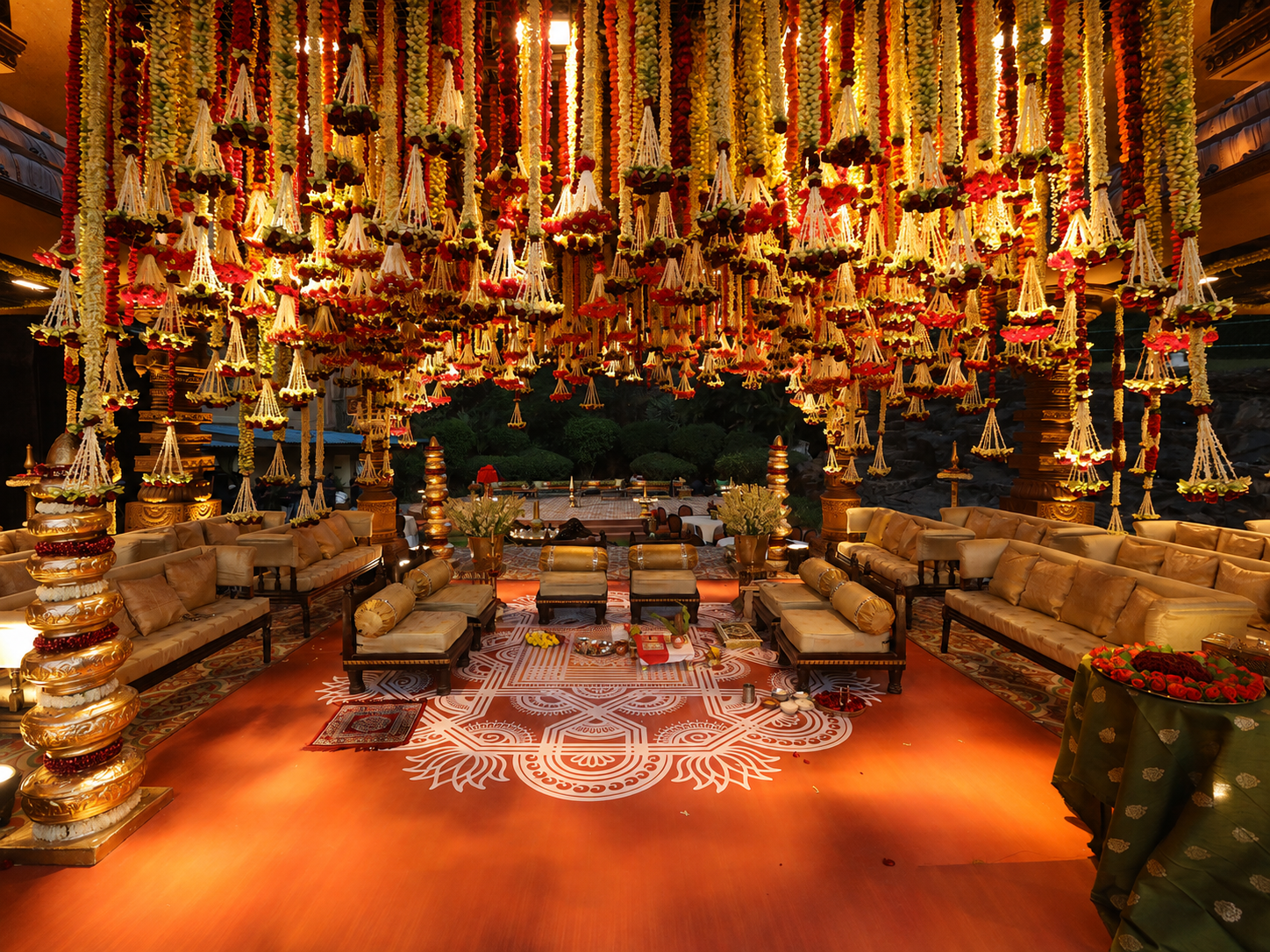
A wedding setting can communicate a great deal before a single word is spoken. The colours, textures, floral arrangements, lighting and architecture establish an atmosphere that guests begin to experience the moment they arrive.
That is what makes the right wedding theme so important. It gives the celebration a visual identity, connects its different elements and creates a setting that feels personal to the couple.
But a memorable wedding theme is about more than selecting a colour palette or choosing a décor style. It is about building a visual narrative. A courtyard can become an intimate garden celebration, a ballroom can be transformed into a contemporary architectural statement, and an outdoor venue can take on an entirely different character through the considered use of light, florals and materials.
At DreamzKrraft, we approach wedding decoration themes as an extension of the couple’s story. The objective is to create an environment where every design decision has a purpose, every function has its own character and the overall celebration feels cohesive without becoming repetitive.
Here are ten wedding theme ideas that demonstrate how décor can do more than set the scene. It can help tell the story of the wedding itself.
1. The Modern Royal Wedding
The story: Timeless grandeur interpreted through a contemporary lens.
Royal-inspired weddings have enduring appeal, particularly for couples drawn to palatial architecture, intricate craftsmanship and formal celebrations. The opportunity lies in interpreting these elements with restraint, rather than reproducing a traditional royal aesthetic in every detail.
A contemporary royal theme can combine rich textures, architectural floral installations, statement entrances and carefully selected metallic accents. The palette might feature ivory, antique gold, deep burgundy or muted jewel tones, depending on the venue and the atmosphere the couple wants to create.
The setting should do much of the work. At a heritage property, existing arches, courtyards and ornamental details can provide the foundation. At a contemporary hotel, bespoke structures and layered materials may be needed to establish a stronger sense of occasion.
How the décor tells the story:
- Architectural framing: Use arches, pillars or structured installations to establish a sense of scale.
- Refined materials: Introduce velvet, embroidered textiles, carved finishes or metallic detailing selectively.
- Statement florals: Create focal arrangements that complement the venue’s proportions.
- Layered lighting: Highlight architectural features and introduce warmth as the celebration moves into the evening.
At DreamzKrraft, the focus would be on identifying which elements create the desired sense of grandeur and which are already present in the venue. The strongest royal-inspired settings feel intentional, with the architecture and décor working together rather than competing for attention.
2. The Secret Garden Wedding
The story: A celebration that feels discovered rather than constructed.
A garden-inspired wedding offers a softer, more organic visual language. It is particularly suited to couples who want their celebration to feel intimate, immersive and connected to nature.
Rather than placing flowers against a neutral backdrop, the design can use greenery, layered foliage, seasonal blooms and natural textures to create a setting that appears to unfold gradually.
The palette might include sage, ivory, dusty pink, soft peach or deeper botanical greens. Wooden elements, textured linens and delicate hanging installations can introduce variation without overpowering the surroundings.
How the décor tells the story:
- A floral entrance: Introduce guests to the theme through a foliage-framed pathway or a carefully composed floral installation.
- Layered greenery: Use varying heights and textures to create depth across the space.
- Intimate seating: Incorporate thoughtfully positioned lounge areas or smaller seating arrangements.
- A natural ceremony setting: Frame the couple with florals and foliage that complement the landscape.
The design should also respond to the venue itself. A landscaped lawn with mature trees requires a different approach from an open courtyard with limited greenery.
DreamzKrraft’s approach would begin by understanding the existing landscape and identifying where additional design can make the greatest difference. The intention is to create a setting that feels immersive without losing the natural character that makes a garden celebration distinctive.
3. The Contemporary Indian Wedding
The story: Indian craftsmanship, colour and tradition interpreted through modern design.
Indian weddings offer an extraordinary range of visual influences, from regional textiles and traditional motifs to intricate craftsmanship, ceremonial elements and vibrant colour palettes.
A contemporary Indian theme brings these references together through a more considered design language. Instead of using every traditional element at once, the celebration can focus on a few distinctive influences and reinterpret them through modern forms.
For example, a palette inspired by Indian textiles could combine vermilion, muted rose and antique gold. Traditional patterns might appear through bespoke screens, printed fabrics or carefully designed backdrops. Brass elements could be paired with contemporary furniture and restrained floral arrangements.
How the décor tells the story:
- Craft-led details: Introduce regional motifs, traditional patterns or artisanal finishes.
- A considered colour palette: Build the design around a small number of complementary colours.
- Contemporary structures: Interpret traditional architectural forms through cleaner lines and modern materials.
- Ceremonial focal points: Give the mandap or principal ritual setting a distinct identity within the overall design.
This theme works particularly well when the couple wants to honour cultural traditions while creating a setting that reflects their present-day aesthetic.
At DreamzKrraft, the design process would consider which traditions are most meaningful to the couple and how those references can be expressed through the setting. This creates a celebration that feels rooted in culture without relying on a standardised interpretation of an Indian wedding.
4. The Mediterranean Escape
The story: A destination-inspired celebration shaped by sunlit landscapes and understated elegance.
A Mediterranean-inspired wedding draws on the visual character of coastal architecture, warm stone, natural textures and relaxed outdoor living.
Think of ivory and sand tones, terracotta accents, olive-inspired greenery, textured ceramics and understated floral arrangements. The palette is warm without being heavy, while the materials introduce character through their finish rather than their ornamentation.
This theme can work beautifully in a coastal venue, a landscaped estate or a contemporary property with outdoor spaces. It can also be adapted to an indoor venue through the use of natural materials, architectural details and carefully controlled lighting.
How the décor tells the story:
- Earth-inspired colours: Combine cream, terracotta, muted green and warm beige.
- Textural details: Introduce stone-inspired finishes, ceramics, natural fabrics and understated tableware.
- Relaxed floral styling: Use arrangements that feel composed rather than excessively structured.
- Outdoor dining: Create a setting that encourages guests to linger and interact.
The key is consistency. A Mediterranean theme can lose its identity when too many unrelated colours, materials and decorative styles are introduced.
DreamzKrraft would approach this concept by identifying the visual elements that best express the intended atmosphere and translating them into a cohesive environment. The result should evoke the character of a destination without becoming a literal recreation of one.
5. The Art Deco Affair
The story: Architectural glamour with a strong visual identity.
For couples who prefer a more dramatic and structured aesthetic, an Art Deco-inspired celebration offers a distinctive design direction.
Recognisable through geometric forms, symmetry, metallic detailing and rich contrasts, the style lends itself to evening receptions, formal dining and venues with strong architectural features.
A palette of black, ivory, champagne and antique gold can establish the foundation, while emerald or burgundy can introduce depth. Geometric patterns, sculptural arrangements and statement lighting can carry the theme across the space.
How the décor tells the story:
- Geometric structures: Use repeating lines and symmetrical forms to establish visual rhythm.
- Statement entrances: Introduce a strong architectural feature that sets the tone immediately.
- Refined table design: Combine structured table settings with carefully selected metallic accents.
- Lighting as a design element: Use lighting to emphasise patterns, structures and focal points.
Art Deco works best when the visual language remains consistent across the major elements. The entrance, stage, dining area and lighting should feel like parts of the same design rather than individual decorative statements.
At DreamzKrraft, the production process would consider how the geometric elements relate to the dimensions of the venue, ensuring that the theme retains its proportions and impact when translated from concept to physical space.
6. The Celestial Wedding
The story: An evening celebration inspired by the night sky.
A celestial theme offers an opportunity to create a more immersive setting, particularly for evening celebrations. Inspired by stars, constellations, the moon and the night sky, it can range from subtle and sophisticated to theatrical and dramatic.
The most refined interpretation uses the celestial references as a design language rather than introducing literal star motifs everywhere.
A midnight-blue, silver and champagne palette can establish the atmosphere. Mirrored finishes, delicate metallic details, sculptural installations and carefully planned lighting can suggest the night sky without making the setting feel overly themed.
How the décor tells the story:
- A deep evening palette: Combine midnight blue, charcoal, silver or champagne.
- Suspended installations: Use overhead elements to create a sense of depth and scale where the venue permits.
- Atmospheric lighting: Introduce carefully positioned points of light and controlled illumination.
- A sculptural focal point: Create one defining installation that establishes the visual identity of the celebration.
The production requirements deserve particular attention. Suspended elements, overhead structures and complex lighting installations require appropriate technical planning, venue approvals and professional installation.
DreamzKrraft’s production-led approach would consider these requirements during the design stage, allowing the visual concept and technical execution to develop together.
7. The Minimalist Luxury Wedding
The story: A celebration where every detail earns its place.
Minimalism is often mistaken for the absence of décor. In reality, a well-executed minimalist wedding depends on precision, proportion and material quality.
The design may use a restrained palette, sculptural floral arrangements, elegant furniture and clean architectural lines. Rather than filling the space with multiple installations, it focuses attention on a smaller number of carefully considered elements.
Ivory, warm white, beige, soft grey and muted metallic accents can establish the palette, although the final choice should respond to the venue and the couple’s preferences.
How the décor tells the story:
- A restrained palette: Limit the number of dominant colours.
- Sculptural florals: Use shape, proportion and placement to create visual interest.
- Quality materials: Let textures and finishes contribute to the design.
- Negative space: Allow architectural features and open areas to remain visible.
- Precise lighting: Use illumination to define focal points without overwhelming the setting.
This approach is particularly effective in contemporary venues where the architecture already provides a strong visual foundation.
At DreamzKrraft, minimalism would not mean doing less without intention. It would mean making deliberate choices about where to invest in design, which details deserve attention and how the overall setting can feel refined without unnecessary additions.
8. The Tropical Garden Celebration
The story: A vibrant, destination-inspired wedding with a sense of movement.
A tropical theme brings together lush foliage, expressive colour, natural textures and an open, celebratory atmosphere. It can work especially well at coastal resorts, private estates and venues with landscaped outdoor spaces.
The design might combine layered greens with coral, fuchsia, orange or yellow, depending on the desired mood. Palm-inspired foliage, bold floral arrangements and textured materials can establish the theme, while the furniture and layout determine whether the atmosphere feels relaxed or more formal.
How the décor tells the story:
- Layered foliage: Use a variety of leaf shapes and heights to introduce depth.
- Expressive florals: Introduce selected accent colours through floral installations and table arrangements.
- Natural textures: Combine wood, woven materials and tactile fabrics.
- Open social spaces: Create lounge areas that encourage guests to interact.
- A transition into evening: Use layered lighting to shift the atmosphere after sunset.
The challenge is balancing abundance with structure. Tropical foliage and bold colours can quickly overwhelm a venue if every surface is treated as a decorative opportunity.
DreamzKrraft would establish a clear hierarchy within the design, identifying the primary focal points and allowing other elements to support them. This keeps the setting vibrant while preserving visual coherence.
9. The Old-World Romance Wedding
The story: A celebration inspired by heritage, craftsmanship and timeless interiors.
Old-world romance draws on the character of historic European estates, traditional architecture, antique finishes and richly layered textures.
It is a suitable direction for couples who prefer a more intimate, classic aesthetic over a contemporary or highly theatrical setting.
The palette may include dusty rose, ivory, burgundy, muted green and antique gold. Floral arrangements can be fuller and more expressive, while textured fabrics, vintage-inspired furniture and candlelight contribute to the atmosphere.
How the décor tells the story:
- Heritage-inspired details: Incorporate antique finishes, traditional patterns or vintage-style furniture.
- Layered floral arrangements: Use complementary flowers and foliage to create depth.
- Textured fabrics: Introduce drapery, embroidered textiles or richly finished linens.
- Warm lighting: Use appropriate candlelight and carefully positioned illumination to create intimacy.
- A considered tablescape: Combine elegant tableware, floral arrangements and stationery within the same visual language.
This theme depends heavily on proportion. In a heritage property, the architecture may already provide the necessary character. In a contemporary venue, additional design elements may be required to establish the intended atmosphere.
DreamzKrraft would develop the setting around the venue’s existing features, ensuring that the old-world references feel integrated rather than artificially applied.
10. The Personalised Storybook Wedding
The story: A celebration built around the couple’s shared history, interests and milestones.
Some of the most distinctive wedding themes begin with something that has nothing to do with a conventional décor style.
It could be a city where the couple met, a shared love of cinema, a favourite travel destination, a meaningful piece of art or a detail that has become part of their relationship.
A personalised storybook theme uses these references to establish the wedding’s visual identity. The challenge is to translate personal meaning into design without making the setting feel overly literal.
For example, a couple who met in New York might draw inspiration from the city’s architectural character, contemporary art and evening atmosphere. A shared love of travel could inform the use of maps, destination references, curated objects and different visual influences across the functions.
How the décor tells the story:
- A defining reference: Identify one or two meaningful influences that can guide the creative direction.
- Personalised design elements: Incorporate details through stationery, installations, table settings or guest experiences.
- A cohesive visual language: Translate the references into colours, materials, typography and spatial design.
- Function-specific storytelling: Reveal different aspects of the couple’s story across the celebrations.
- Thoughtful restraint: Allow the references to inform the design without turning every element into a literal representation.
At DreamzKrraft, personalisation begins with understanding the couple rather than selecting a theme from a list. Their story becomes the starting point, with the creative team translating it into an environment that feels individual, considered and visually cohesive.
How to Choose the Right Wedding Decoration Theme
With so many wedding theme ideas to explore, the challenge is not finding inspiration. It is deciding which direction will work for the couple, the venue and the celebration as a whole.
Before finalising a theme, consider these five factors.
1. The couple’s personality
The theme should reflect the couple’s preferences, shared interests and the kind of atmosphere they want to create. A visually striking concept will have greater meaning when it connects to something personal.
2. The venue’s character
Architecture, landscape, existing finishes and available space should inform the design. A theme that works beautifully in a garden may need a different interpretation in a ballroom.
3. The scale of the celebration
A design that feels intimate at a small gathering may not have the same impact across a large venue. Consider sightlines, guest numbers, installation dimensions and how the design will be experienced from different areas.
4. The relationship between functions
For a multi-day wedding, the theme should provide an overarching creative direction while allowing individual functions to develop their own identities.
5. The practical requirements
Fabrication, installation schedules, technical production, venue restrictions and weather contingencies need to be considered before the design is finalised.
At DreamzKrraft, these considerations form part of the creative process. They help establish a direction that is visually distinctive, personal to the couple and achievable within the realities of the celebration.
Bringing Your Wedding Theme to Life With DreamzKrraft
A wedding theme is most effective when it does more than establish a visual style. It creates a connection between the couple, the venue and the experience their guests will remember.
At DreamzKrraft, we approach wedding decoration themes through a combination of creative direction, spatial design and production expertise. The process begins with understanding the couple’s vision, identifying the possibilities of the venue and developing a design language that can carry across the celebration.
From bespoke installations and carefully composed floral arrangements to the way each function transitions into the next, every element is considered in relation to the larger experience.
The objective is not to make every space elaborate or fill every available area with décor. It is to understand where design can make the greatest difference and how each detail can contribute to the overall story.
Because the most memorable wedding settings are not simply beautiful.
They tell a story that feels entirely their own.
Frequently Asked Questions
1. What are the most popular wedding decoration themes?
Popular wedding decoration themes include modern royal, garden-inspired, contemporary Indian, Mediterranean, Art Deco, celestial, minimalist luxury, tropical, old-world romantic and personalised themes. The right choice depends on the couple’s preferences, the venue and the atmosphere they want to create.
2. How do you choose wedding theme ideas that suit your venue?
Begin by assessing the venue’s architecture, landscape, available space and existing visual character. A heritage property may suit a classic or contemporary royal interpretation, while a landscaped estate may lend itself to garden-inspired or tropical styling. The theme should complement the venue while allowing room for the couple’s personal preferences.
3. How can wedding décor tell a couple’s story?
Décor can reflect a couple’s story through colours, materials, meaningful references, personalised installations and the design of individual functions. The most effective approach translates personal details into a cohesive visual language rather than using literal references throughout the venue.
4. How can you make different wedding functions look distinct but cohesive?
Develop an overarching creative direction, then establish a different atmosphere for each function through colour, materials, floral styling, lighting and spatial design. Consistent design principles can connect the celebrations without requiring the same décor to be repeated across every event.
5. What should be considered when planning bespoke wedding décor?
Bespoke décor requires consideration of the concept, venue dimensions, materials, fabrication, transportation, installation, safety and technical requirements. These factors should be assessed during design development so that the finished installation delivers the intended visual impact and works within the event environment.
6. How does DreamzKrraft develop a wedding decoration theme?
DreamzKrraft begins by understanding the couple’s vision, preferences, venue and overall celebration requirements. This informs the creative direction, which is then developed through spatial design, décor planning and production considerations. The objective is to create a cohesive setting that reflects the couple while working within the practical requirements of the wedding.
7. Can wedding decoration themes be adapted for destination weddings?
Yes. A theme can be developed around the destination’s landscape, architecture, climate and cultural character. The design should also account for local venue requirements, material availability, transportation, installation schedules and weather contingencies to ensure the concept can be executed successfully.
8. How do you create a luxurious wedding setting without overcrowding the venue?
Focus on proportion, material quality, carefully selected focal points and the relationship between the décor and the architecture. A few well-designed installations can have greater impact than numerous competing elements. Thoughtful lighting, refined floral styling and considered spatial planning can further elevate the experience without overwhelming the setting.